Disclosure: This post may contain affiliate links. We may earn a small commission at no extra cost to you if you make a purchase through these links. Please read our full Disclaimer for more details.
Most people asking can you mix benzoyl peroxide and retinol want a clear yes-or-no. The practical answer is that you can include both in one routine, but you almost never want them touching the skin at the same time. Dermatologists generally favor splitting them by time of day or by night so the skin gets the potential benefit of each without the highest risk of irritation or reduced activity. This approach works for many with mild to moderate acne concerns; more severe cases usually need a doctor’s input rather than self-managed layering. Individual tolerance still decides everything. This piece is educational only and does not replace advice from a qualified healthcare professional.
How Benzoyl Peroxide and Retinol Work on the Skin
Benzoyl Peroxide Basics
Benzoyl peroxide works mainly as an antibacterial agent. It releases oxygen on the skin surface and may help lower the number of acne-related bacteria living there. Over-the-counter versions typically sit between 2.5 % and 10 %. Washes, foaming cleansers, and leave-on gels are the most common formats. Many people start with a 2.5–4 % wash because higher strengths can feel harsher without always delivering better results for everyday use.
Retinol and Retinoid Basics
Retinol is a vitamin A derivative that supports the skin’s natural cell turnover process and may help keep pores looking clearer over weeks of consistent use. Cosmetic retinol sits below prescription retinoids such as tretinoin or adapalene in strength. The difference matters because prescription versions usually require a doctor’s oversight, while cosmetic retinol is sold freely. Neither ingredient guarantees a specific outcome; results depend on concentration, formulation, and how consistently and carefully a person uses it.
Mixing benzoyl peroxide and retinol raises the classic question of whether the two cancel each other or simply become too irritating when applied together.
Can You Mix Benzoyl Peroxide and Retinol? What the Evidence Suggests
Benzoyl peroxide and retinol are one of the more commonly discussed pairs on any skincare ingredient chart. Most dermatology sources still recommend separating them rather than applying them in the same step. The main concerns are oxidation and cumulative irritation. Benzoyl peroxide can break down certain traditional retinol formulas on contact, which may lower the retinol’s activity. At the same time both ingredients can dry the skin, so stacking them increases the chance of redness, flaking, or a tight barrier. Most dermatology guidance therefore recommends separating the two rather than applying them in one step. Tolerance varies widely; some skin handles the combination easily when timed correctly, while other skin needs a slower schedule or lower strengths. Benzoyl peroxide mixed with retinol in the same application is the scenario most sources advise against for everyday cosmetic products.
Stability and Formulation Differences
Adapalene is more chemically stable next to benzoyl peroxide than classic retinol. That is why some prescription gels combine the two in one formula. Certain microencapsulated or antioxidant-stabilized retinol products also aim to resist breakdown better than plain retinol. Even so, most over-the-counter pairings still benefit from time separation until you know how your own skin reacts. Do not assume a drugstore retinol will behave like a specially engineered prescription combination.
Irritation Potential
Each ingredient alone can produce temporary dryness, redness, or flaking. Using them without a buffer or a gradual introduction may increase the likelihood of those effects. A compromised barrier (already red, tight, or peeling) makes the combination harder to tolerate. The usual advice is to start one active first, let the skin adjust, then add the second while watching closely for persistent stinging or widespread flaking.
Practical Ways to Use Benzoyl Peroxide and Retinol Together
Morning Benzoyl Peroxide, Nighttime Retinol Approach
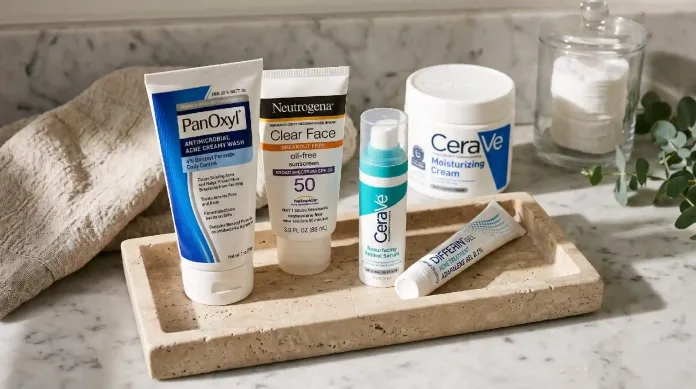
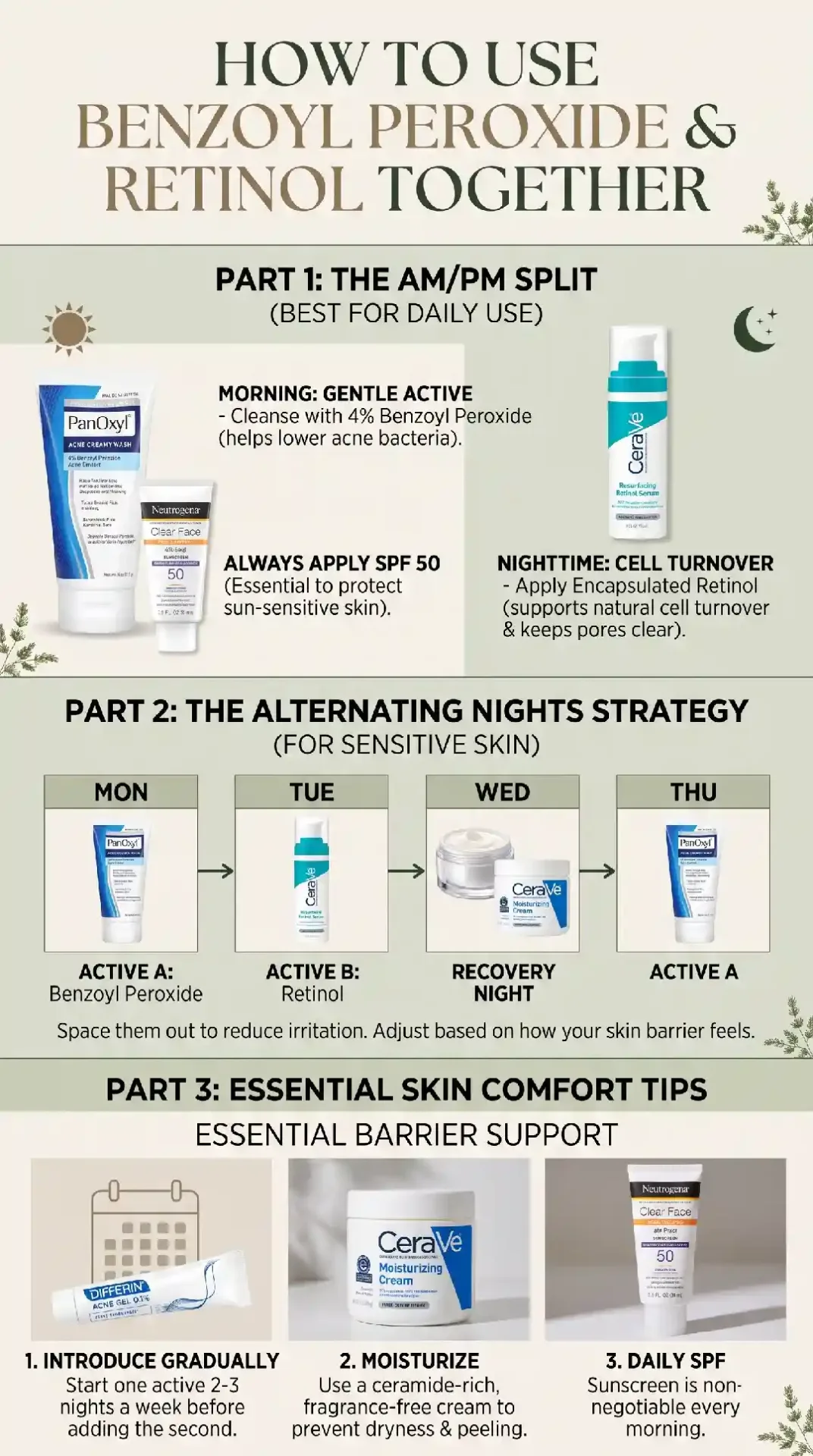
The simplest split most people use is benzoyl peroxide in the morning and retinol at night. This keeps the two from contacting each other directly and still lets each ingredient work during the part of the day when it is most practical. Sunscreen is essential every morning because retinol can raise sun sensitivity. A gentle wash is often easier to tolerate than a leave-on gel first thing. Many people reach for PanOxyl Antimicrobial Acne Creamy Wash, 4% Benzoyl Peroxide because the 4 % creamy formula rinses clean and feels less stripping than higher-strength foams. Another well-tolerated option is CeraVe Acne Foaming Cream Cleanser with 4% Benzoyl Peroxide, which adds ceramides and niacinamide that may help keep the barrier more comfortable while you cleanse.
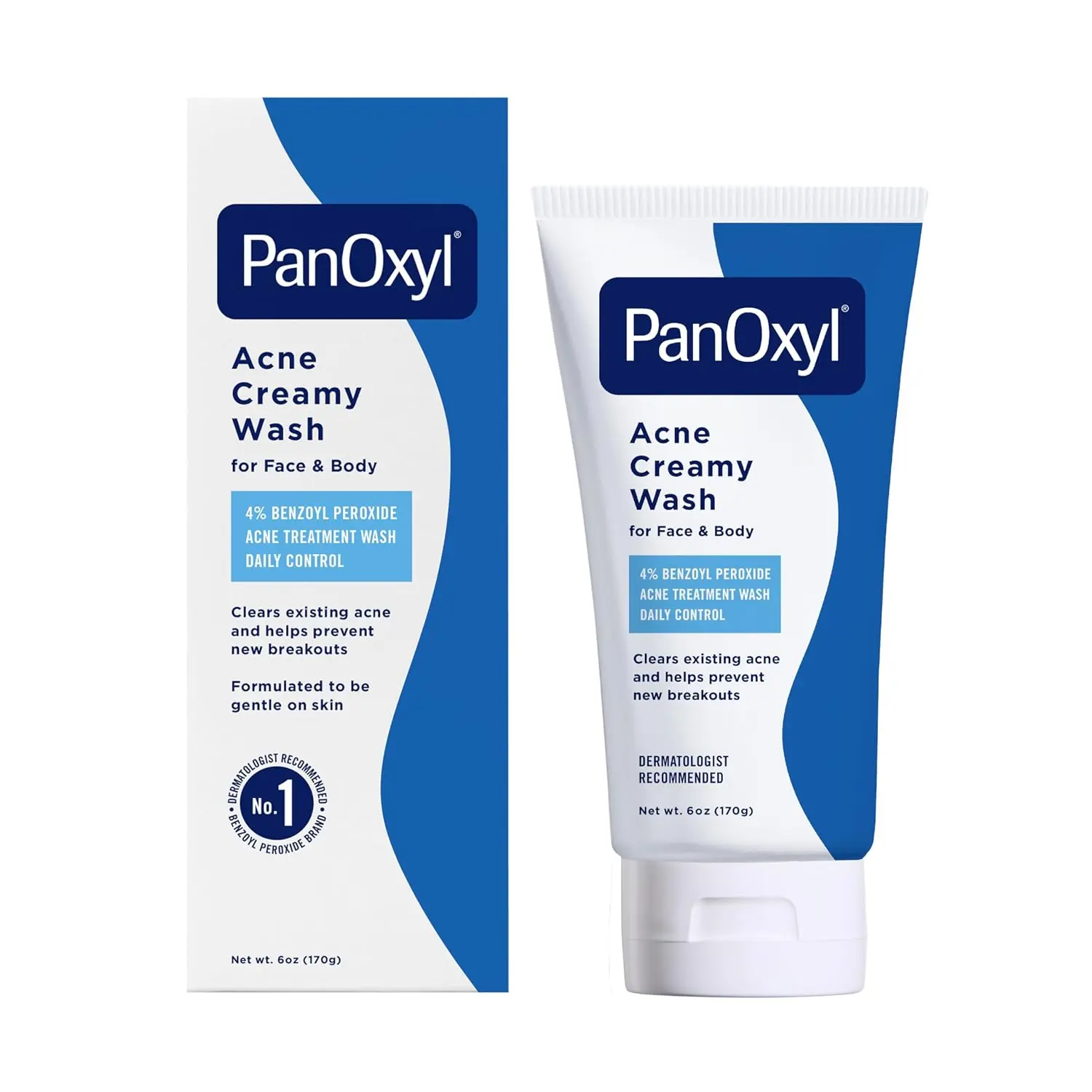
PanOxyl Antimicrobial Acne Creamy Wash, 4% Benzoyl Peroxide
The 4% creamy formula rinses clean and feels less stripping than higher-strength foams.
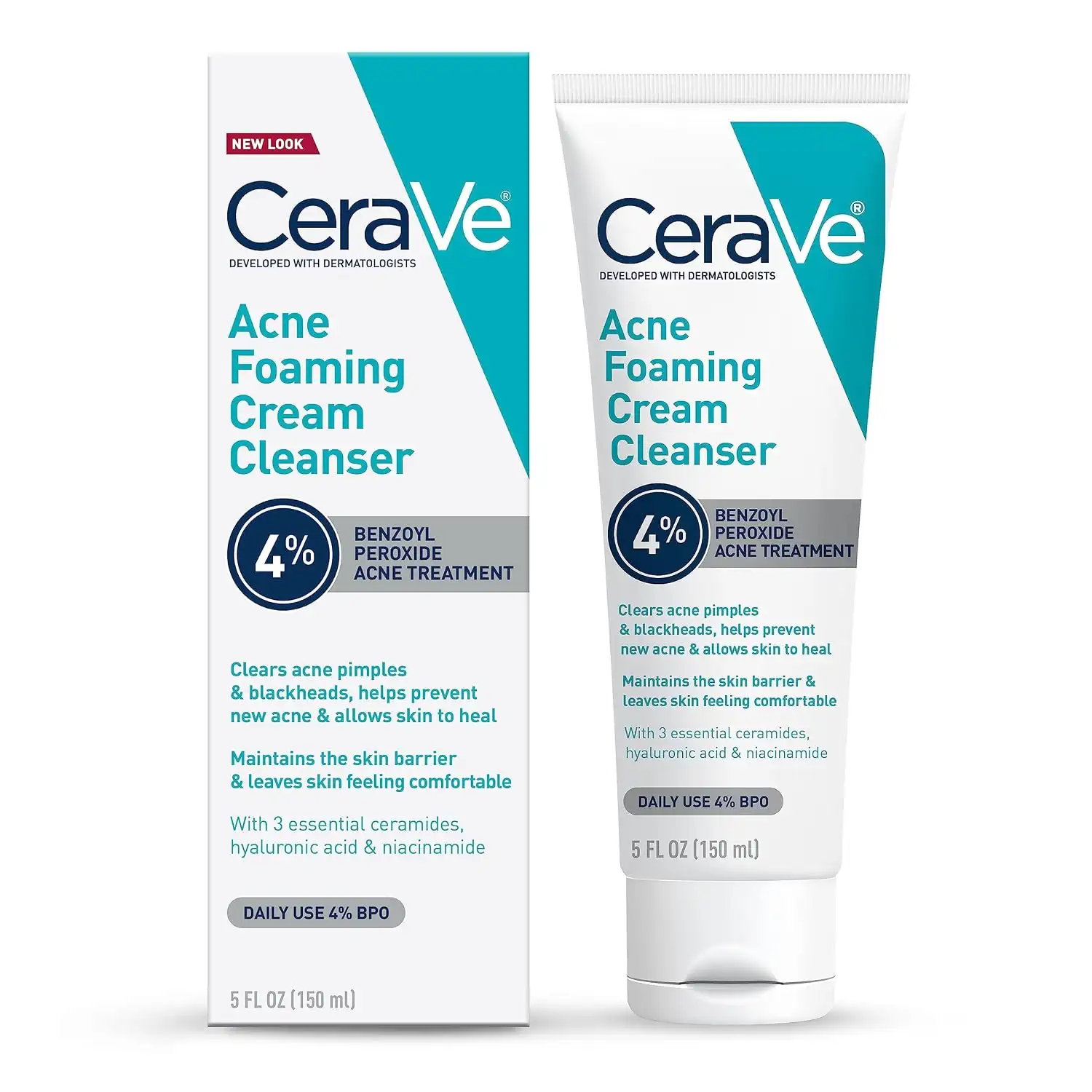
CeraVe Acne Foaming Cream Cleanser with 4% Benzoyl Peroxide
Adds ceramides and niacinamide that may help keep the barrier more comfortable while you cleanse.
Alternating Nights Strategy
Some people prefer to use one ingredient on certain nights and the other on different nights, inserting recovery nights when the skin feels tight. This lowers the daily load. Begin with two or three nights a week of one active, then introduce the second only after the first feels manageable. Can you use benzoyl peroxide and retinol together on this staggered schedule? Yes for many users who monitor their skin and slow down at the first sign of excessive dryness. Using benzoyl peroxide and retinol together this way often proves more sustainable than forcing both every night. Can i use retinol and benzoyl peroxide together under an alternating plan? It depends on your barrier and how slowly you increase frequency.
For a fuller evening approach that focuses specifically on retinol for adult acne, many people start with an encapsulated serum and gradually increase frequency. CeraVe Resurfacing Retinol Serum pairs encapsulated retinol with ceramides and niacinamide, a combination many acne-prone users find easier to introduce than free-form high-strength retinol.

CeraVe Resurfacing Retinol Serum
Pairs encapsulated retinol with ceramides and niacinamide for a gradual release that’s easier to introduce for acne-prone skin.
Special Considerations for Severe Acne
Over-the-counter benzoyl peroxide and retinol may support the look of mild-to-moderate concerns, but they are frequently not enough on their own for severe, cystic, or scarring acne. Those cases usually need evaluation by a board-certified dermatologist who can decide whether prescription combinations or other therapies are more appropriate. Some prescription products already combine adapalene with benzoyl peroxide in a single stable formula. Can i combine benzoyl peroxide and retinol as part of a multi-step home routine? Many people do for milder concerns, but severe acne is better managed with professional guidance. Can i mix benzoyl peroxide and retinol at home when breakouts are deep and painful? The safer step is to see a dermatologist first. Can i mix retinol and benzoyl peroxide while waiting for an appointment if the acne is only mild? Time separation remains the approach most sources support.
Adapalene itself is sold over the counter as Differin Acne Retinoid Treatment Gel, 0.1% Adapalene. Because adapalene stays more stable next to benzoyl peroxide than traditional retinol, some people use it in routines that also include a benzoyl peroxide product at a different time of day, always following the label and watching for irritation.
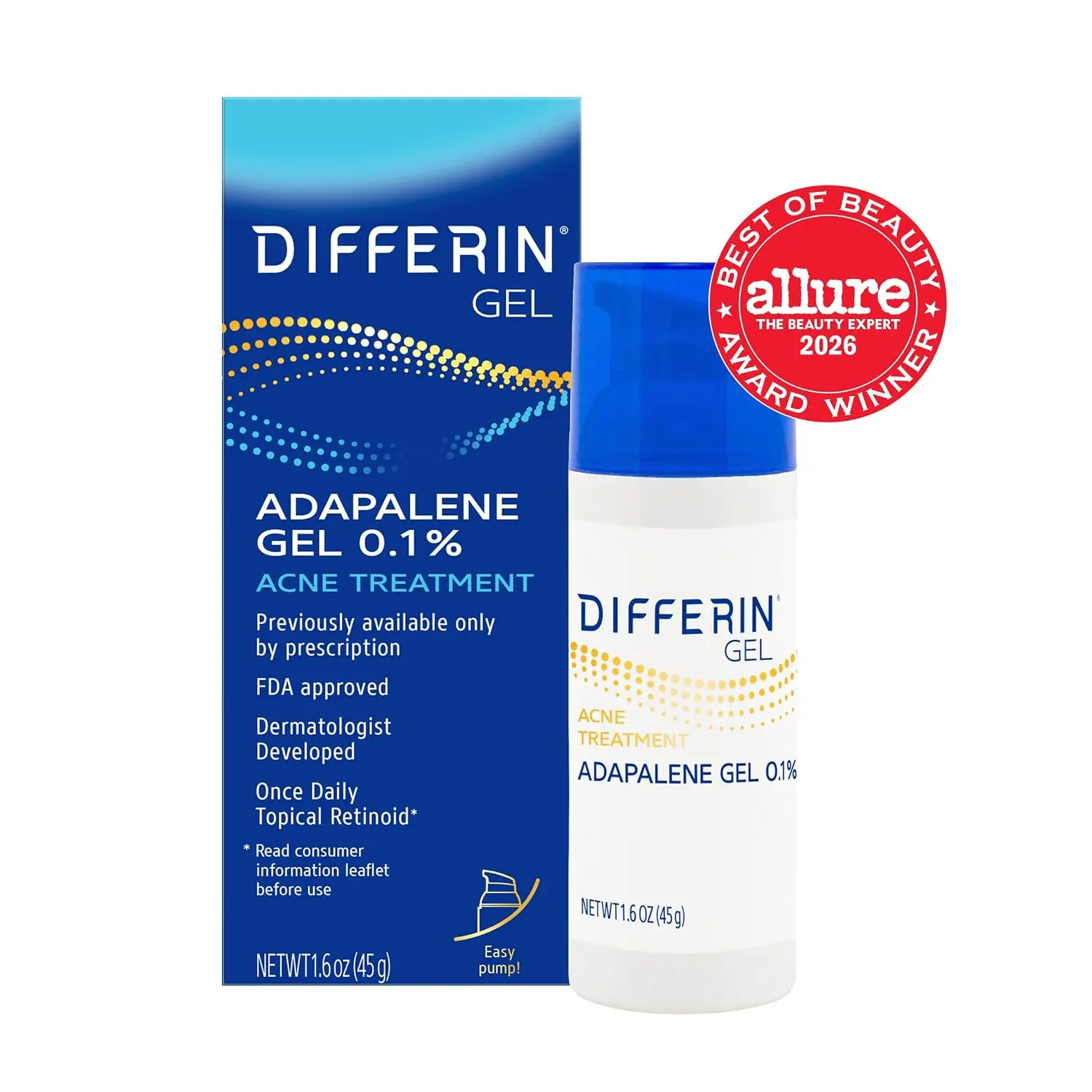
Differin Acne Retinoid Treatment Gel, 0.1% Adapalene
Stable prescription-strength adapalene that helps clear acne deep in the pores and works well alongside routines.
Tips to Support Skin Comfort When Using Both
Barrier Support and Moisturizing
A gentle, fragrance-free moisturizer that may help support the skin barrier is standard when either ingredient is in the routine. Avoid adding strong acids or other intense actives unless a professional has already approved the plan. Applying a ceramide-rich cream after the active has absorbed often reduces the tight, flaky feeling that appears in the first weeks. [INSERT AFFILIATE LINK: CeraVe Moisturizing Cream] is a frequent choice—rich enough to cushion the barrier yet non-comedogenic for most acne-prone skin.
How to Introduce Them Gradually
Start with one ingredient two or three nights a week. Add the second only after the first is well tolerated. Persistent stinging, flaking that does not improve with moisturizer, or a shiny tight appearance are signals to pause or drop back in frequency. Recovery nights matter more than perfect consistency in the early stages.
Sun Protection Is Essential
Retinol can increase sun sensitivity, so daily broad-spectrum sunscreen is non-negotiable. Can you mix benzoyl peroxide with retinol and still protect the skin outdoors? Only if sunscreen is applied every morning without exception. Retinol mixed with benzoyl peroxide in a poorly timed routine raises irritation risk further when UV exposure is high. Can i mix retinol with benzoyl peroxide and skip sunscreen on cloudy days? No—UV reaches the skin regardless of visible sun. A lightweight, non-comedogenic formula made for acne-prone skin, such as Neutrogena Clear Face Sunscreen Lotion SPF 50, helps many people stay consistent without feeling greasy.
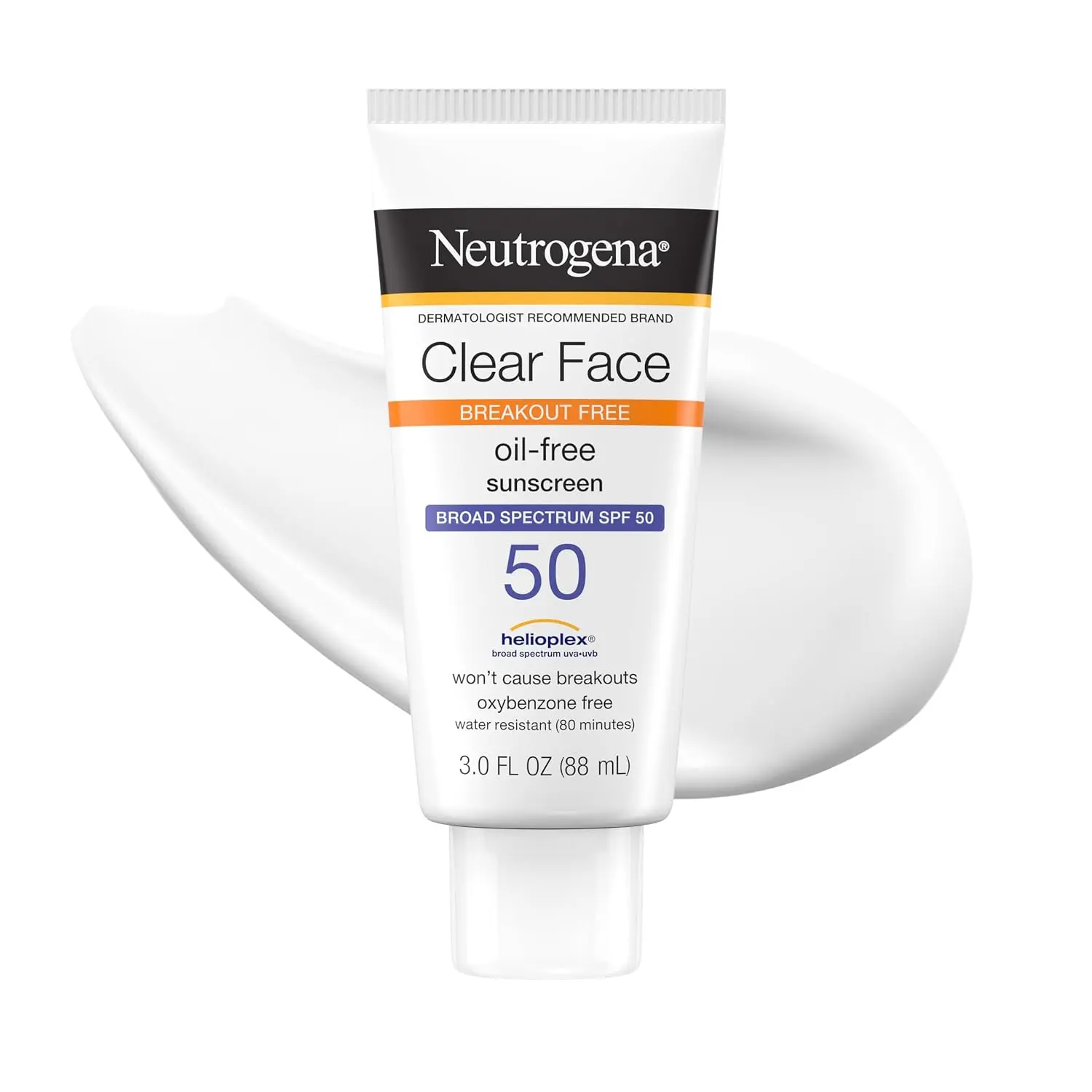
Neutrogena Clear Face Sunscreen Lotion SPF 50
A lightweight, non-comedogenic formula made for acne-prone skin that helps protect against UV without feeling greasy.
When to Pause or Seek Professional Guidance
Stop both actives if you notice lingering burning after moisturizer, widespread redness, or peeling that spreads beyond the usual adjustment window. Focus on gentle cleansing and moisturizing until the barrier feels calm again. Anyone with sensitive skin, eczema, rosacea, or a history of reactions should talk to a dermatologist before combining these ingredients. Severe acne needs medical evaluation; over-the-counter products are not designed to replace professional care for deep or scarring breakouts.
Many people successfully keep both ingredients in a routine when they separate them by time of day or by night, introduce them slowly, and support the barrier. Tolerance is individual, sunscreen is mandatory, and a dermatologist’s input is especially important for severe acne. Check labels, patch-test anything new, and ask a professional for advice tailored to your skin. Can you mix benzoyl peroxide and retinol without problems? For a large number of users the answer is yes when the timing and supporting products are right—just not by applying them together in the same step.