Disclosure: This post may contain affiliate links. We may earn a small commission at no extra cost to you if you make a purchase through these links. Please read our full Disclaimer for more details.
Most people lump every lingering mark left behind by a breakout into the catch-all category of “acne scars,” then wonder why expensive brightening serums fail to budge stubborn redness. The truth is that flat discoloration isn’t true textural scarring at all, and treating red marks the exact same way as brown spots often backfires. Understanding PIE vs PIH is the single smartest shortcut to clearing your complexion without wasting money on the wrong active ingredients. Once you match your targeted skincare routine to the actual biological cause beneath your skin’s surface, those lingering post-breakout reminders finally start to fade.
PIE vs PIH: What Is the Real Difference?
At a glance, post-acne discoloration just looks like uneven skin tone. Beneath the surface, however, PIE vs PIH involves two completely different biological reactions to inflammation. Mixing them up is why many routines stall out.
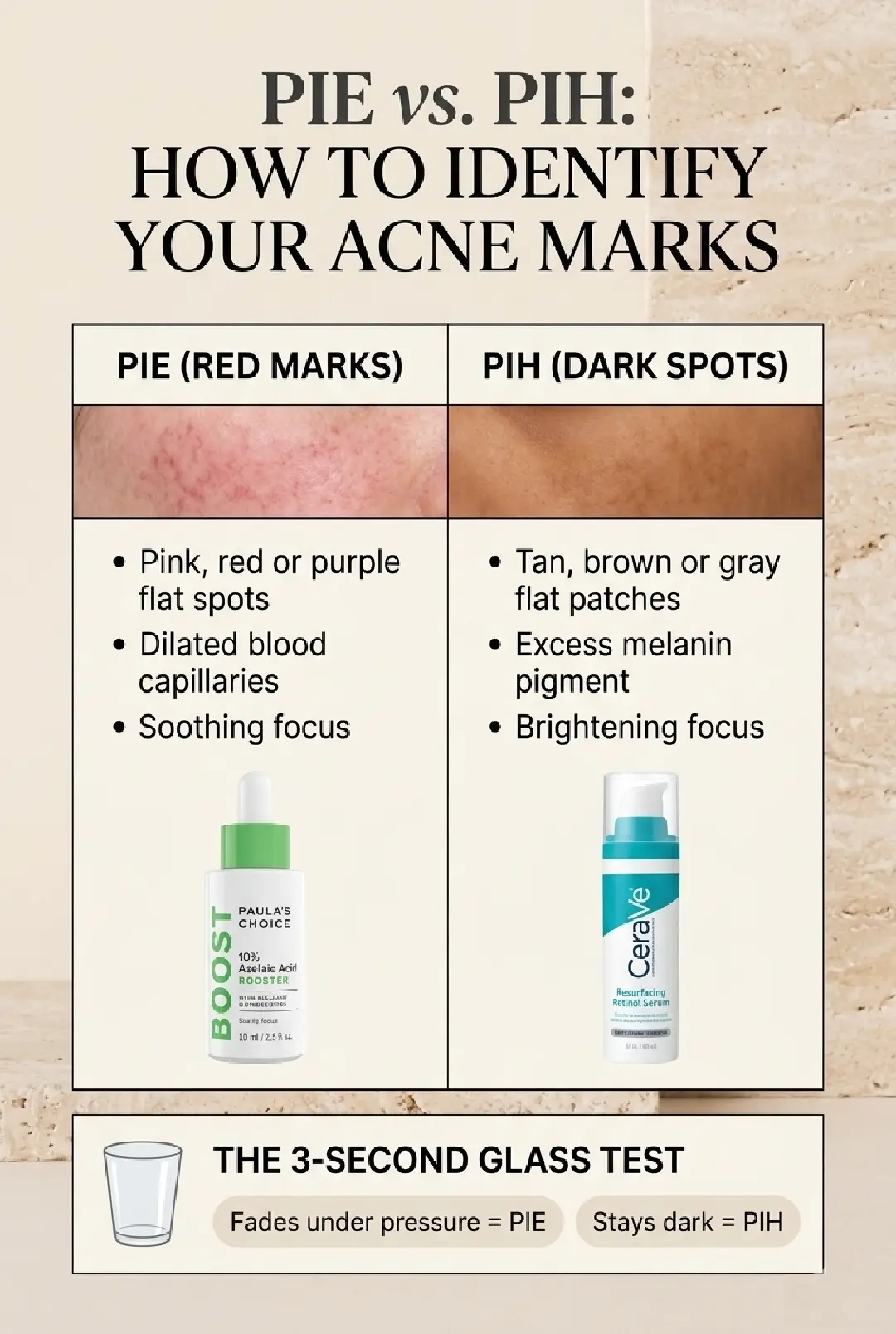
What Is Post-Inflammatory Erythema (PIE)?
When a deep, angry blemish heals, it often leaves behind flat pink, bright red, or light purple spots. Dermatologists call this post inflammatory erythema. Rather than being a pigment issue, PIE happens because the intense inflammation from a breakout damages or dilates the tiny blood capillaries near the surface of your skin.
This vascular redness shows up most noticeably on lighter skin tones (Fitzpatrick skin types I through III). Because those microscopic blood vessels remain widened while your skin barrier recovers, the red mark lingers long after the pimple flattens out. Harsh scrubs and strong acids only aggravate these fragile capillaries further.
What Is Post-Inflammatory Hyperpigmentation (PIH)?
On the flip side, post inflammatory hyperpigmentation shows up as flat tan, dark brown, or grayish-brown patches. Instead of dilated blood vessels, PIH is caused by an overproduction of melanin—the natural pigment that gives your skin its color. When inflammation triggers your skin’s defense system, pigment-producing cells (melanocytes) go into overdrive and dump excess melanin into the healing tissue.
Understanding red acne marks vs dark spots comes down to blood versus pigment. While anyone can develop PIH, it occurs far more frequently and lasts longer in medium, olive, and deep skin tones (Fitzpatrick skin types IV through VI), where melanocytes react much more strongly to trauma.
The 3-Second “Glass Test” to Identify Your Acne Marks at Home
You do not need a dermatologist’s magnifying lamp to figure out which type of mark you are dealing with. Grab a clear drinking glass from your kitchen and follow these three quick steps in front of a well-lit mirror:
- Step 1: Press the flat bottom or side of the clear glass firmly against the discolored spot on clean skin.
- Step 2: Look closely through the glass while maintaining gentle pressure.
- Step 3: Watch how the color behaves.
If the mark temporarily turns white or fades completely under pressure—and snaps right back to red the second you lift the glass—you are looking at PIE. Pressing the glass briefly pushes blood out of the dilated capillaries. If the spot stays stubbornly brown or dark through the glass, melanin is the culprit, meaning you have PIH.
Keep one crucial distinction in mind here. Both PIE and PIH sit completely flat against the skin. If you run a clean finger over the area and feel a pitted indentation (like an ice-pick or boxcar dip) or a raised, firm bump, you are dealing with true textural scarring rather than surface discoloration. Topical skincare works wonders on flat marks, whereas indented scars require professional in-office procedures.
How to Fade PIE (Red Marks): Focus on Soothing and Vascular Support
When learning how to fade acne marks caused by vascular redness, your number-one rule is simple: stop attacking your skin. Aggressive exfoliation strips your moisture barrier, ramps up low-grade inflammation, and keeps those tiny capillaries dilated for months longer.
Instead, build your routine around calm, barrier-first ingredients that visibly quiet redness:
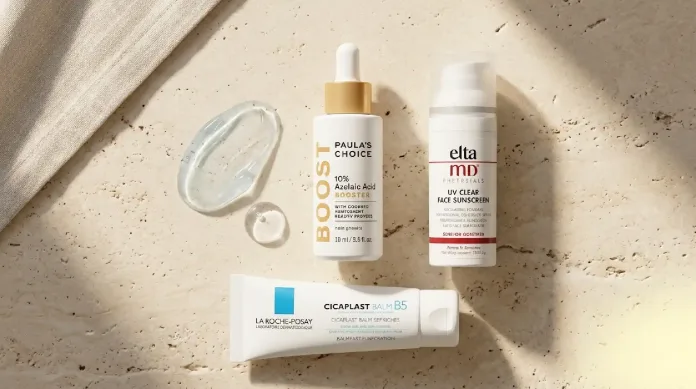
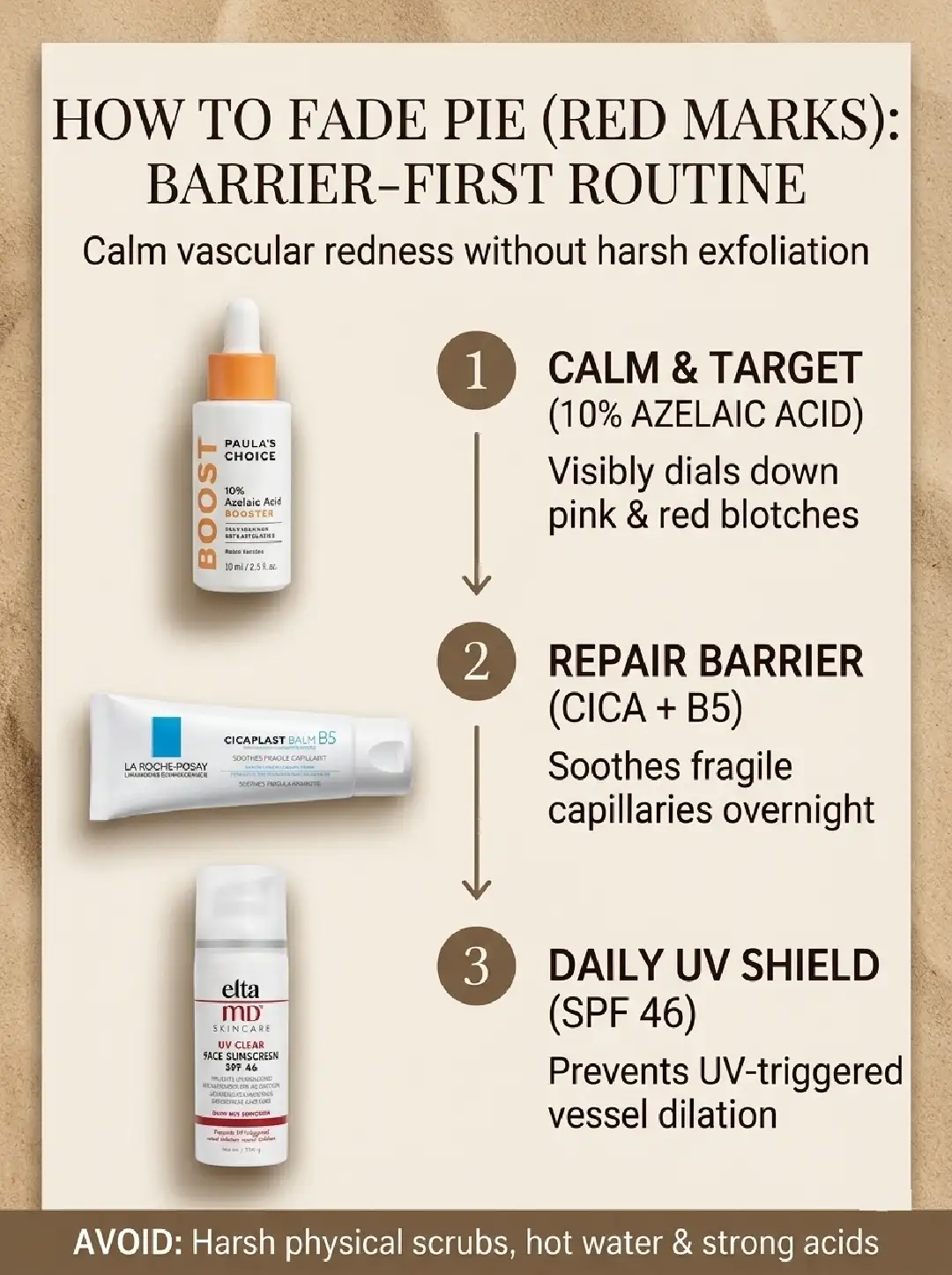
- Azelaic Acid (10% to 15%): If you pick one active ingredient for redness, make it azelaic acid for acne marks. This gentle dicarboxylic acid visibly calms post-breakout redness, keeps pores clear, and targets uneven tone without the sting of harsh acids. Layering a targeted formula like Paula’s Choice BOOST 10% Azelaic Acid Booster onto clean skin once or twice daily helps visibly dial down pink and red blotches while smoothing rough texture.
- Centella Asiatica (Cica) and Panthenol: Broken skin needs deep hydration to repair fragile capillary walls. Rich, soothing barrier creams packed with vitamin B5 and madecassoside act like a comforting bandage overnight. Applying a pea-sized layer of La Roche-Posay Cicaplast Balm B5 as the final step in your evening routine helps replenish dry, stressed skin so redness subsides faster.
- Niacinamide (2% to 5%): Higher concentrations aren’t always better. A moderate dose of vitamin B3 strengthens your skin’s lipid barrier and visibly reduces blotchiness without triggering flushing.
Skip physical face scrubs, hot water washes, and high-percentage glycolic peels while PIE is active. Cool water and gentle, fragrance-free cleansers do half the heavy lifting.
How to Fade PIH (Dark Spots): Focus on Pigment Inhibitors and Cell Turnover
Fading brown marks requires a two-pronged strategy. First, you need ingredients that slow down excess melanin production so spots stop darkening. Second, you need gentle cellular turnover to lift existing pigmented cells up and off the surface.
When shopping for the best ingredients for acne dark spots, look for proven brighteners that work well together:
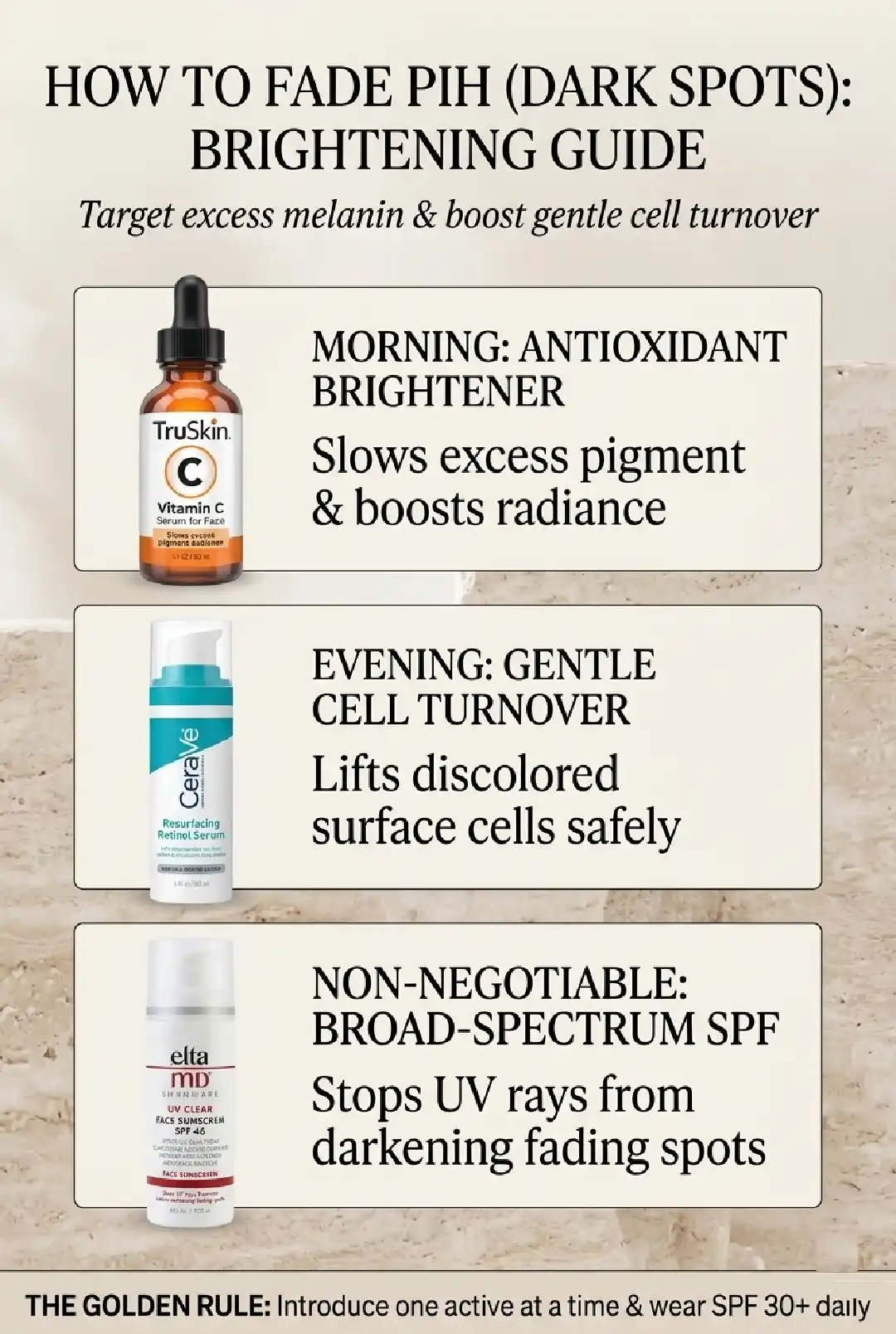
- Encapsulated Retinol: Retinoids encourage fresh, evenly pigmented skin cells to replace older, discolored ones on the surface. Rather than jumping straight to prescription strength—which can cause irritation and trigger even more dark spots on deeper skin tones—start with a gentle, barrier-friendly option. Incorporating CeraVe Resurfacing Retinol Serum three nights a week helps visibly refine post-blemish marks while ceramides and licorice root keep your moisture barrier intact.
- Vitamin C (L-Ascorbic Acid or Sodium Ascorbyl Phosphate): Antioxidants protect healing skin from free-radical damage while interfering with the enzyme responsible for excess pigment. Smoothing a few drops of TruSkin Vitamin C Serum for Face underneath your morning moisturizer delivers brightening vitamin C alongside botanical hyaluronic acid to support a clearer, more luminous complexion.
- Alpha Arbutin and Tranexamic Acid: Both ingredients pair effortlessly with vitamin C and retinol to visibly fade stubborn brown patches without irritating sensitive skin.
Patience pays off here. Introduce one brightening product at a time, waiting two weeks before adding another so your skin stays calm.
The Non-Negotiable Step That Makes or Breaks Both Routines
You can buy the most expensive serums on the shelf, and they still won’t work if you skip morning sunscreen. Ultraviolet rays penetrate clouds and windows every single day, directly sabotaging your progress on both fronts.
For PIH, UV exposure signals melanocytes to pump out fresh pigment immediately, turning a fading tan mark right back into a dark brown spot after just fifteen minutes outdoors. For PIE, sun exposure weakens collagen around blood vessels, making surface capillaries dilate even further and stay red longer. This is the one area where PIE vs PIH advice overlaps completely: broad-spectrum SPF 30 or higher is non-negotiable every single morning.
Many people with breakout-prone skin avoid sunscreen because heavy formulas feel greasy or clog pores. Choosing a lightweight, niacinamide-infused mineral-hybrid formula like EltaMD UV Clear Face Sunscreen SPF 46 solves that problem instantly—it absorbs invisibly with zero white cast while actively helping calm sensitive, blemish-prone skin. Reapply every two hours whenever you spend extended time outside.
When At-Home Skincare Isn’t Enough
Even with a dialed-in routine, post-acne discoloration moves on its own timeline. Mild red or brown spots typically take anywhere from three to six months to fade noticeably, while deeper marks can linger for up to a year.
If you have followed a consistent routine with daily sunscreen for six full months and see zero shift, book a consultation with a board-certified dermatologist. In-office treatments can speed up stubborn discoloration safely when tailored to your skin tone:
- For Stubborn PIE: Vascular lasers—such as pulsed-dye lasers (like V-Beam) or intense pulsed light (IPL)—target the hemoglobin inside dilated blood vessels directly, collapsing broken capillaries so redness clears in just a few sessions.
- For Stubborn PIH: Superficial chemical peels (using mandelic, lactic, or salicylic acid) or gentle non-ablative lasers help lift deeper pigment clusters without risking thermal damage to melanin-rich skin.
The Bottom Line on Clearing Post-Acne Marks
Clear, even-toned skin starts with accurate detective work rather than guessing in the skincare aisle. Take three seconds to run the clear glass test, identify whether you are dealing with PIE vs PIH, and commit to either barrier-soothing redness care or steady pigment brighteners. Keep your routine gentle, never pick at active blemishes, and lock in your progress with broad-spectrum sunscreen every single morning—your future skin will thank you for the patience.