Disclosure: This post may contain affiliate links. We may earn a small commission at no extra cost to you if you make a purchase through these links. Please read our full Disclaimer for more details.
Adult breakouts paired with early fine lines are common. A well-structured retinol routine addresses both by increasing cell turnover so dead skin cells are less likely to trap oil and form clogs. The challenge is that vitamin A derivatives often cause dryness and irritation, which adult skin handles less easily than teenage skin. The goal is steady improvement without damaging the barrier.
Why Retinol Helps with Breakouts
Retinol works by speeding up the rate at which skin cells shed. This reduces the chance that dead cells and oil will combine and form comedones. For hormonal or stress-related adult acne, this consistent turnover is often more useful than aggressive drying treatments. Results appear gradually rather than overnight.
Adult skin produces less oil than younger skin. Using high-strength retinoids every night can compromise the barrier, increase water loss, and sometimes worsen breakouts. Consistency with a moderate approach usually outperforms intensity.
How to Structure Your Evening Retinol Routine
Start two to three nights a week and increase only as your skin tolerates it.
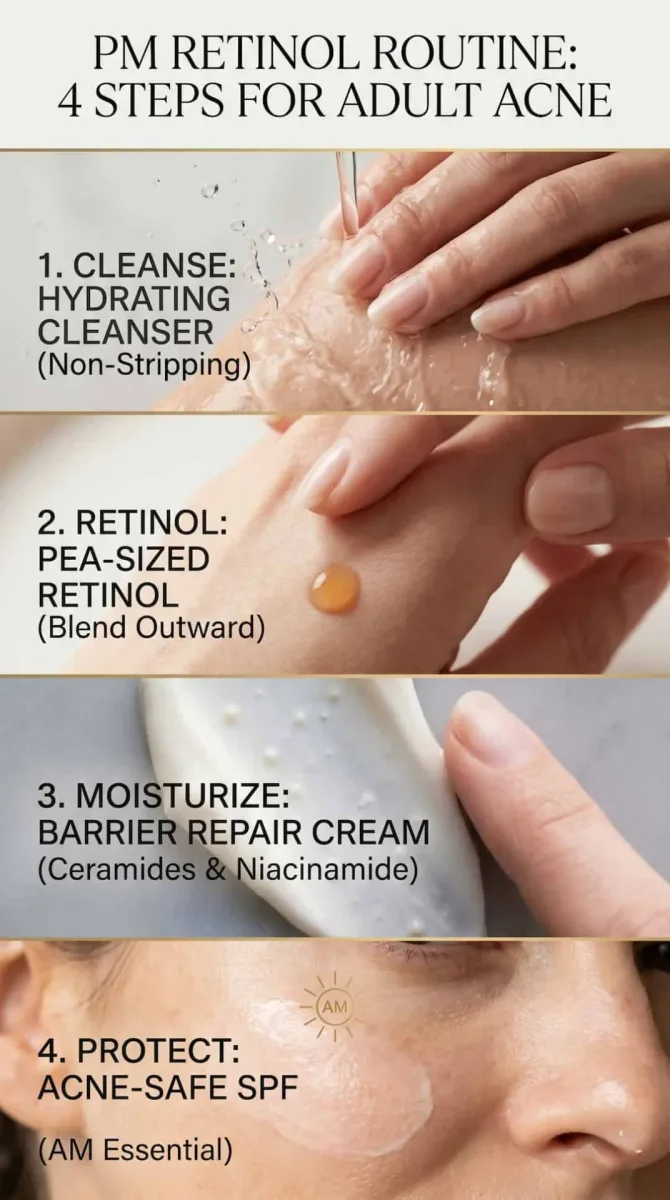
Step 1: Cleanse without stripping
Use a gentle, sulfate-free cleanser that removes makeup and sunscreen without leaving the skin tight. Avoid salicylic acid cleansers on retinol nights; combining two exfoliants increases irritation risk. Pat the skin completely dry. Applying retinol to damp skin increases penetration and the likelihood of peeling.
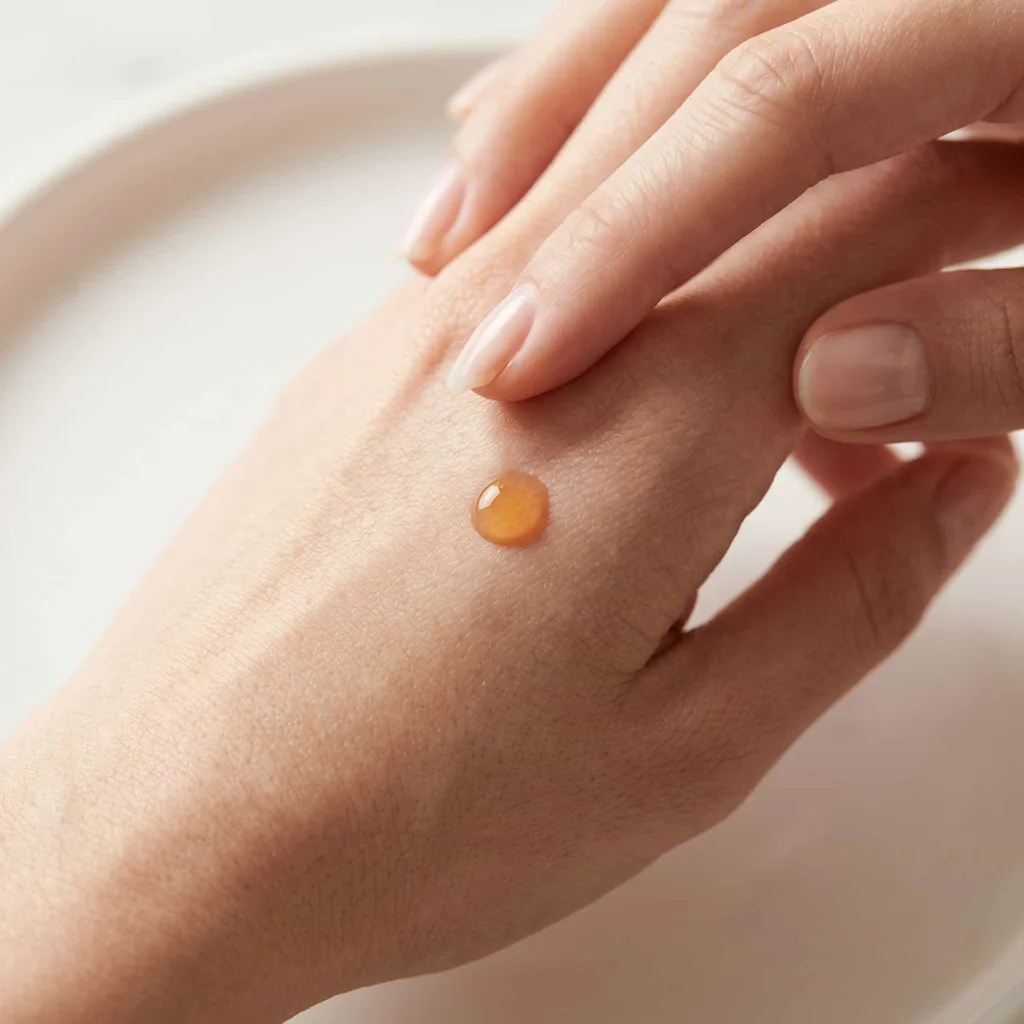
Step 2: Apply a pea-sized amount
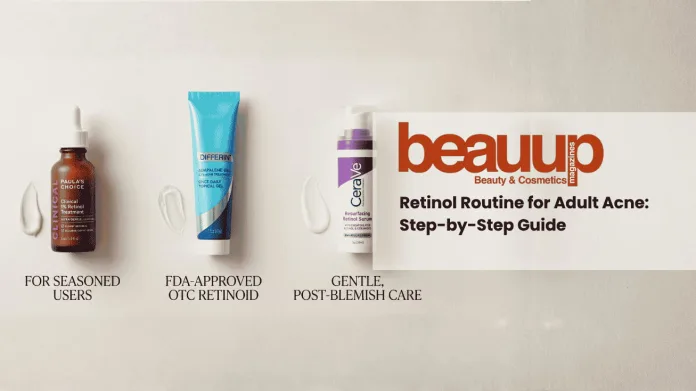
Dot the product on the forehead, cheeks, and chin, then blend outward. Keep it away from the eye area and the corners of the mouth. For experienced users, a formula such as Paula’s Choice CLINICAL 1% Retinol Treatment pairs pure retinol with soothing ingredients like licorice root. Beginners often do better with a lower strength or an encapsulated version.
Step 3: Moisturize to support the barrier
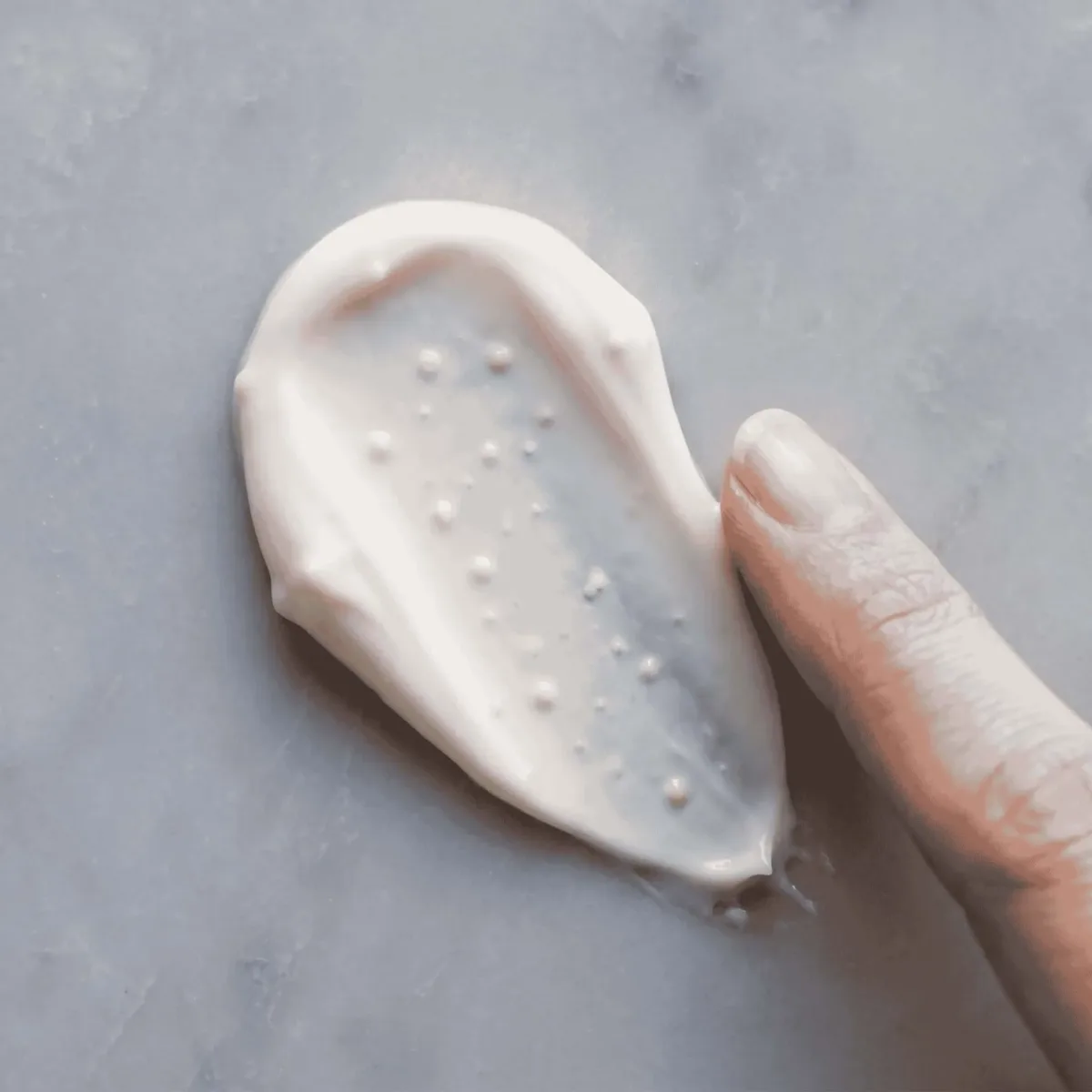
Wait a few minutes, then apply a moisturizer containing ceramides, glycerin, or niacinamide. La Roche-Posay Toleriane Double Repair Face Moisturizer is one non-comedogenic option that many people with blemish-prone skin tolerate well. This step helps reduce dryness and supports barrier recovery.
Step 4: Use sunscreen every morning
Retinol brings newer skin to the surface, which is more vulnerable to UV. Daily broad-spectrum SPF is essential to prevent post-inflammatory hyperpigmentation from darkening. EltaMD UV Clear Face Sunscreen, SPF 46 is a frequent choice for acne-prone skin because it contains niacinamide and has a lightweight finish.

Practical Product Examples
- Differin Adapalene Gel 0.1% Acne Treatment is an OTC retinoid specifically recognized for acne. It targets pathways involved in clogged pores and is often used for persistent adult breakouts along the chin and jawline.
- CeraVe Resurfacing Retinol Serum uses encapsulated retinol that releases more slowly, which can make it gentler for skin that is also dealing with post-blemish marks.
Tips to Reduce Purging and Irritation
Many people search for what not to mix with retinol or which ingredients not to mix with retinol. Combining strong actives at the same time commonly leads to barrier damage, redness, and peeling.
Avoid layering these in the same routine:
- Strong acids (high-strength glycolic acid, salicylic acid leave-ons, or multi-acid peels)
- Benzoyl peroxide (especially leave-on formulas; it can increase irritation and may reduce the effectiveness of some retinoids)
- High-concentration vitamin C serums
- Physical scrubs or abrasive exfoliants
The practical approach is to alternate nights or use one in the morning and the retinoid at night. For a full overview of common conflicts, see our guide on what not to mix skincare.
If you specifically want guidance on whether you can mix benzoyl peroxide and retinol, the safest methods involve time separation rather than direct layering.
Final Notes
Introduce retinol slowly, prioritize barrier support, and never skip sunscreen. If breakouts remain severe or you are pregnant or planning pregnancy, consult a board-certified dermatologist—retinoids are not recommended during pregnancy.
This article provides general information based on established dermatologic principles for OTC retinoids. It is not medical advice. Individual results vary. Consult a qualified healthcare professional for personalized recommendations.