Disclosure: This post may contain affiliate links. We may earn a small commission at no extra cost to you if you make a purchase through these links. Please read our full Disclaimer for more details.
Every spike in your blood sugar can trigger skin glycation, a natural chemical reaction where excess glucose and fructose latch onto your collagen and elastin fibers. Over time, these sugar-coated proteins stiffen, lose their bounce,and leave your complexion looking dull, crepey, and older than your years. Sugar leaves receipts on your face. You do not need to banish fruit or swear off dessert forever to protect your glow, though. Pairing targeted topical antioxidants and daily sunscreen with smart meal timing helps keep your skin resilient, luminous, and visibly firm.
The Science of How Sugar Ages Skin Beneath the Surface
Understanding how sugar ages skin starts in the dermis, the supportive middle layer that gives your face its plush cushion and spring-like snap. Two proteins run the show here: collagen provides structural density, while elastin lets your skin stretch when you smile and bounce back effortlessly when you relax. When bloodstream glucose stays elevated after refined carbohydrates, sweetened lattes, or high-glycemic snacks, unattached sugar molecules drift into dermal tissue and bond directly to those amino acids without needing an enzyme to spark the reaction.
What Happens When Glucose Meets Collagen and Elastin
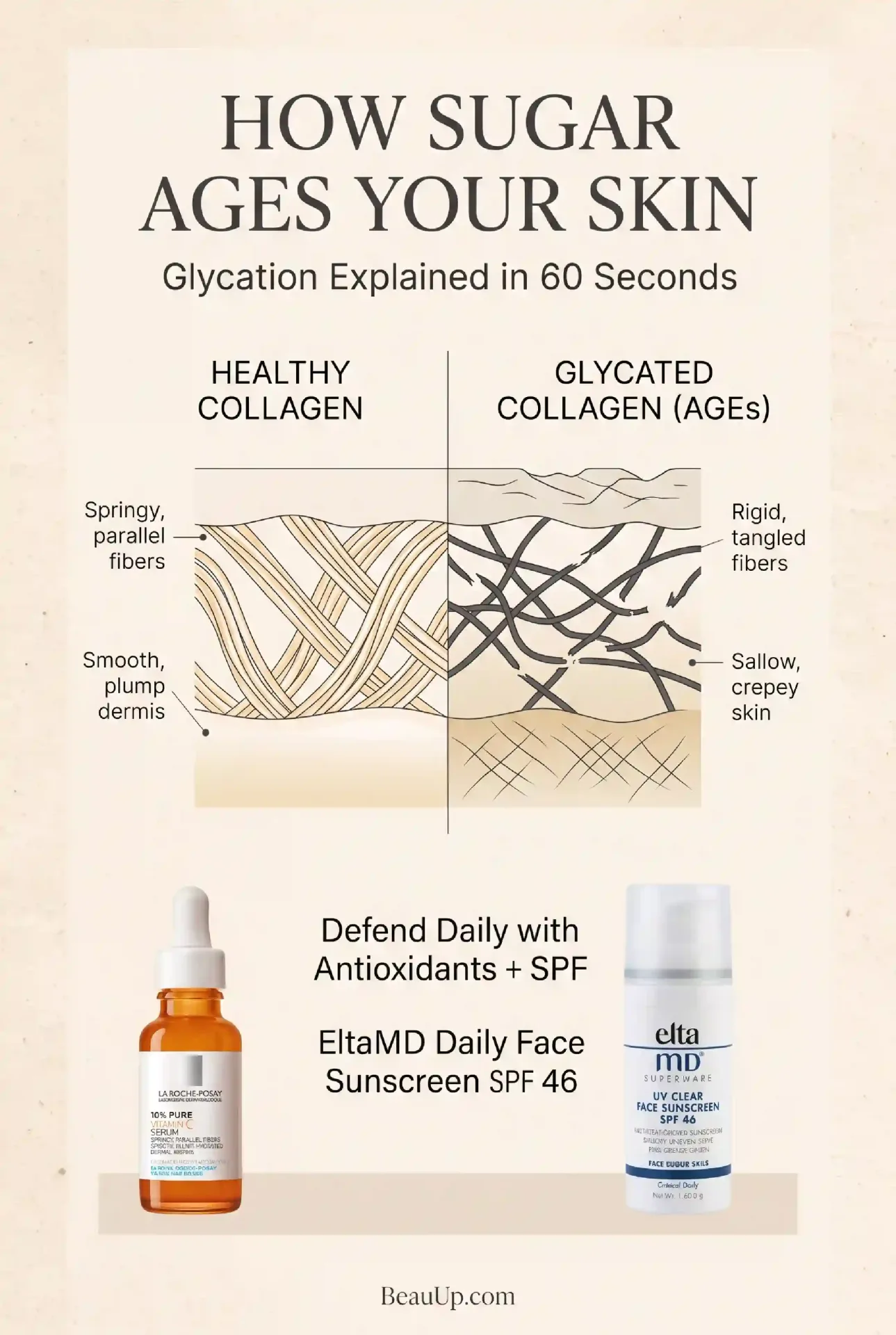
Picture fresh, healthy collagen fibers as supple silk threads arranged in a neat, flexible lattice. When stray glucose or fructose molecules attach to those threads, they form sticky bridges between adjacent fibers. Chemists call this structural stiffening collagen cross-linking, and it robs your skin of its natural snap. Instead of gliding smoothly past one another when your face moves, cross-linked fibers tug, tangle, and turn brittle. Enzymes that normally clear out worn collagen struggle to break down these sugar-fused bundles, so stiffened fibers linger in the dermis while fresh collagen production slows down.
How Advanced Glycation End Products Weaken the Dermis
Once sugar binds to a protein and undergoes a series of irreversible chemical rearrangements, it forms compounds accurately nicknamed AGEs—short for advanced glycation end products. Over months and years, advanced glycation end products skin accumulation turns bouncy dermal architecture into a rigid, fragile mesh. Your body naturally clears small amounts of AGEs in your twenties, but natural cellular turnover decelerates around age 30 and drops further during perimenopause. Sunlight accelerates the damage dramatically. Ultraviolet rays generate reactive oxygen species that speed up sugar-protein bonding by orders of magnitude, turning routine afternoon sun exposure into a catalyst for deeper structural wear.
5 Visible Signs of Skin Glycation (And What “Sugar Face” Looks Like)
Recognizing skin glycation early helps you adjust both your skincare shelf and your plate before fine lines etch deeper into the dermis. Unlike dehydration lines that plump back up after one night with a rich moisturizer, sugar-driven structural changes show up as distinct shifts in texture, elasticity, and undertone.
Cross-Hatched Lines and Loss of Bounce
- Crisscrossed cheek and mouth creases: Unlike classic expression lines that follow muscle movement, glycation wrinkles often form a delicate, cross-hatched pattern across the lower cheeks, upper lip, and under-eye area.When stiffened collagen fibers lose flexibility, the skin creases like crumpled tissue paper rather than folding cleanly.
- Slack jawline contour: Healthy elastin acts like a fresh rubber band holding facial contours taut against gravity.As sugar cross-links weigh down elastin fibers, skin around the chin and lower face gradually loses its crisp snap and begins to feel softer or slightly slack to the touch.
Sallow Tone, Dullness, and Compromised Barrier Resilience
- Yellowish or sallow undertone: The exact same Maillard reaction that browns toast in a toaster happens microscopically inside sugar-loaded dermal proteins. Dermatologists and estheticians often group these telltale changes under sugar face symptoms, including a sallow yellowish cast, persistent dullness, and sluggish blemish recovery.
- Thinner, crepey surface texture: Brittle dermal support makes the overlying epidermis look noticeably thinner,especially in areas with fewer oil glands like the neck, chest, and orbital bone.
- Lingering post-blemish marks: High glycemic load triggers low-grade inflammatory signaling alongside rigid collagen remodeling, which can leave red or brown post-acne marks hanging around weeks longer than usual.
Topical Anti-Glycation Skincare Ingredients That Visibly Support Firmness
Building a smart anti-glycation skincare routine focuses on intercepting free radicals before they lock sugar onto structural fibers. While no cream dissolves existing sugar bonds overnight, targeted formulas help defend dermal proteins against the oxidative stress that accelerates skin glycation every single day.
L-Carnosine, Niacinamide, and Blueberry Extract
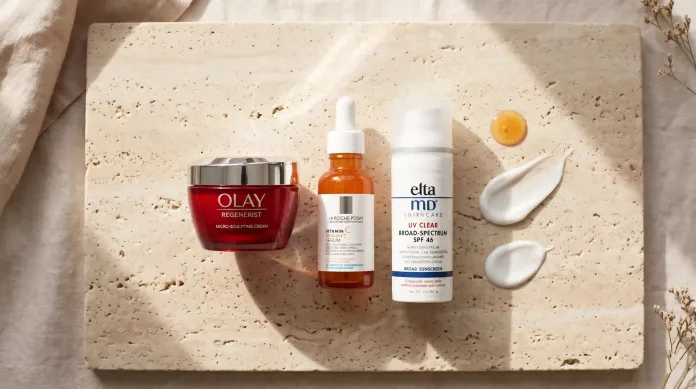
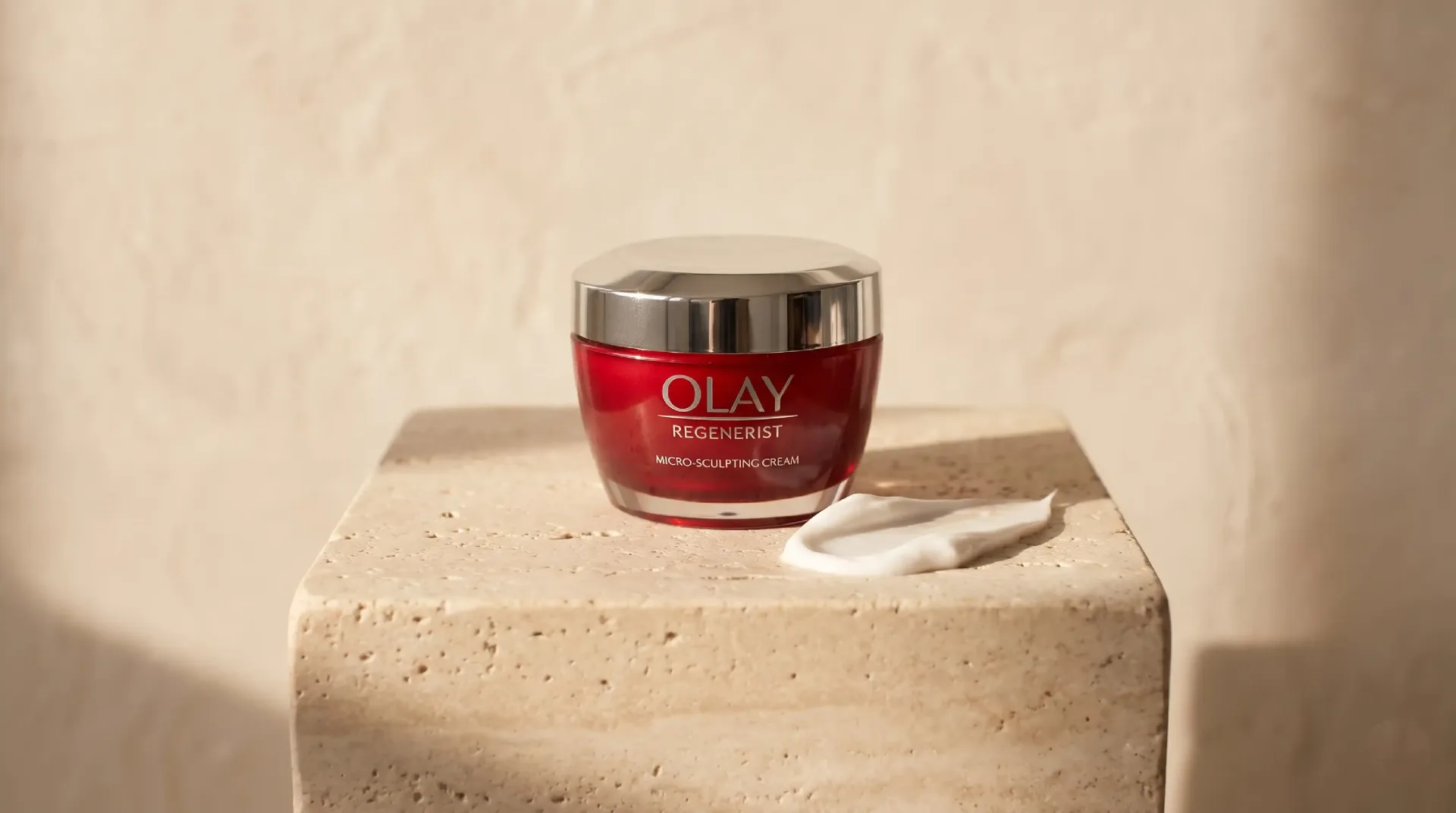
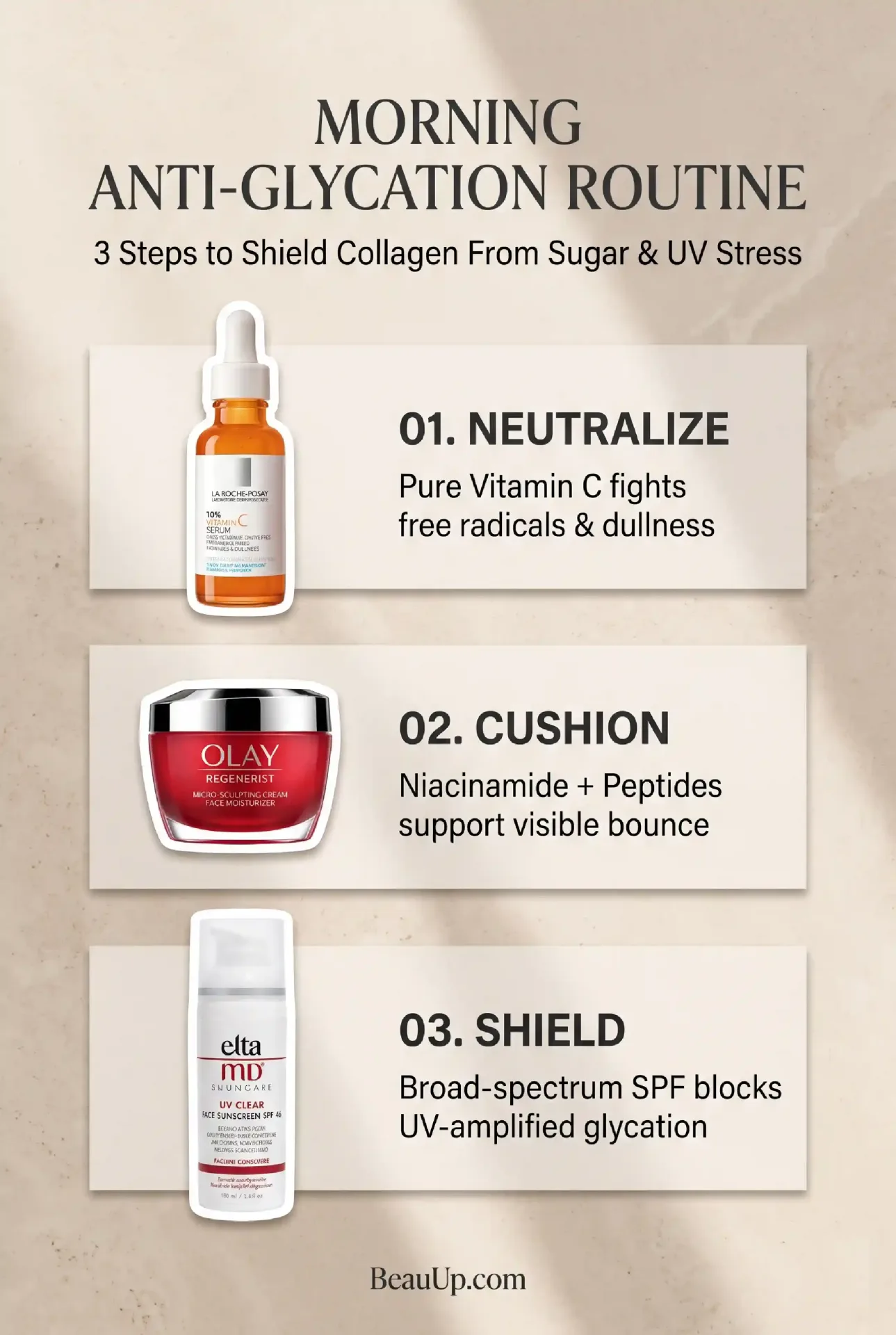
Certain topical ingredients act like sacrificial decoys or cellular bodyguards inside the upper layers of skin. L-carnosine,a naturally occurring dipeptide, mimics the amino acid structure of collagen so circulating sugars bind to the peptide instead of your structural proteins. Polyphenol-rich blueberry and pomegranate extracts similarly help neutralize carbonyl stress before cross-links form. Niacinamide (vitamin B3) pulls double duty by visibly brightening sallow yellow undertones and supporting natural ceramide synthesis. Layering a peptide-and-niacinamide-rich moisturizer such asOlay Regenerist Micro-Sculpting Cream Face Moisturizermorning and night cushions the moisture barrier while visibly improving skin bounce and smoothness.
Stabilized Vitamin C and Broad-Spectrum Sunscreen
Antioxidants and UV filters form your non-negotiable daytime shield against photo-glycation. Pure L-ascorbic acid donates electrons to neutralize UV-induced free radicals and supports healthy collagen synthesis, visibly restoring radiance to tired, dull skin. Applying a few drops ofLa Roche-Posay 10% Pure Vitamin C Serum onto clean, dry morning skin helps brighten uneven tone and defend against environmental stressors. Follow it immediately with broad-spectrum sun protection, because UV rays supercharge sugar-protein cross-linking even on overcast mornings. A lightweight daily formula like EltaMD UV Clear Face Sunscreen SPF 46 pairs broad-spectrum UV defense with calming niacinamide so your pores stay clear and your dermal matrix stays shielded all afternoon.
Gentle Retinoids for Supporting Healthy Cell Turnover
Nighttime is prime recovery hours for sluggish skin. Topical retinoids encourage steady epidermal renewal and support healthy collagen production, helping replace stiff, weathered surface texture with fresher, smoother-looking skin.Harsh, high-percentage retinoids can backfire by inflaming an already stressed barrier, so slow-release encapsulation makes all the difference. Smoothing on CeraVe Resurfacing Retinol Serum three to four evenings a week delivers encapsulated retinol alongside soothing ceramides and licorice root extract to refine fine lines without triggering flaky irritation.
Inside-Out Habits to Minimize Sugar-Driven Skin Stress
Topical serums only reach so far when your bloodstream floods the dermis with glucose three times a day. Small,sustainable shifts in how you build meals and prepare food dramatically lower the daily sugar load reaching your skin.

Smart Glycemic Pairing and Cooking Methods
You do not need to count every gram of carbohydrate to flatten your glucose curve. Order matters. Eating fiber-rich vegetables, lean protein, and healthy fats before starches slows stomach emptying and blunts post-meal blood sugar spikes by up to 30 percent. Swap naked carbs—like a plain bagel or sugary iced coffee on an empty stomach—for Greek yogurt with berries, eggs with avocado toast, or a handful of almonds alongside your afternoon treat.
Cooking temperature matters just as much as ingredient lists. Dry, high-heat cooking methods like grilling, frying, and broiling create pre-formed dietary AGEs directly inside food—think crispy blackened edges on meat or caramelized pastries. Choosing gentler, water-based methods such as steaming, poaching, braising, or slow-cooking keeps dietary AGE intake low while preserving moisture and nutrients. Adding acidic marinades made with lemon juice or apple cider vinegar before cooking also cuts pre-formed AGE formation in half.
Targeted Ingestible Support for Skin Hydration and Elasticity
Targeted daily nutrition helps supply the amino acids and polyphenols your skin relies on to maintain resilience.Unsweetened green tea and hibiscus tea deliver concentrated catechins that help defend against oxidative stress without adding a single gram of sugar to your day. If you want an easy addition to your morning coffee or smoothie, stirring in a scoop of Vital Proteins Collagen Peptides Powder Supplementsupplies bioavailable glycine, proline, and hydroxyproline alongside hyaluronic acid and vitamin C to support skin hydration and elasticity from within.
Realistic Timeline: Can You Reverse Glycation Damage?
Existing cross-linked collagen fibers cannot be completely undone overnight, because those chemical bonds lock permanently onto older protein strands. Your skin constantly builds new collagen and sheds old surface cells, though—which means halting new sugar damage transforms how your face looks within one to two skin renewal cycles. Expect brighter clarity and calmer redness within four weeks of consistent antioxidant and SPF use, followed by noticeably firmer bounce and softer fine lines between eight and twelve weeks.
Protecting your complexion from skin glycation does not require cutting out every birthday slice or morning latte forever. True beauty begins on the inside, in our heart—and in the everyday rituals that honor both joy and nourishment. Pair sweet moments with protein and fiber, wear your sunscreen like daily armor, and let consistent care restore your skin’s natural radiance.