
Disclosure: This post may contain affiliate links. We may earn a small commission at no extra cost to you if you make a purchase through these links. Please read our full Disclaimer for more details.
The beauty industry loves to overcomplicate hydration, yet sometimes the most effective solutions are already sitting right in your pantry. If you are looking into coconut oil for skin care, you certainly aren’t alone in wanting to strip back a cluttered routine. Packed with rich lipids, this botanical powerhouse delivers serious moisture and a coveted glow when applied correctly to the right skin type. Disclaimer: This article is for informational purposes only and is not a substitute for professional dermatological advice. Always perform a patch test before trying new skincare ingredients.
Top Skincare Benefits of Coconut Oil
Despite the endless influx of lab-made serums, cold-pressed oils continue to hold their ground in luxury regimens. The science behind this particular oil relies heavily on its unique molecular makeup rather than marketing hype. It isn’t a miracle cure for medical conditions, but it is an exceptional conditioning agent.
Deep Hydration and Moisturization
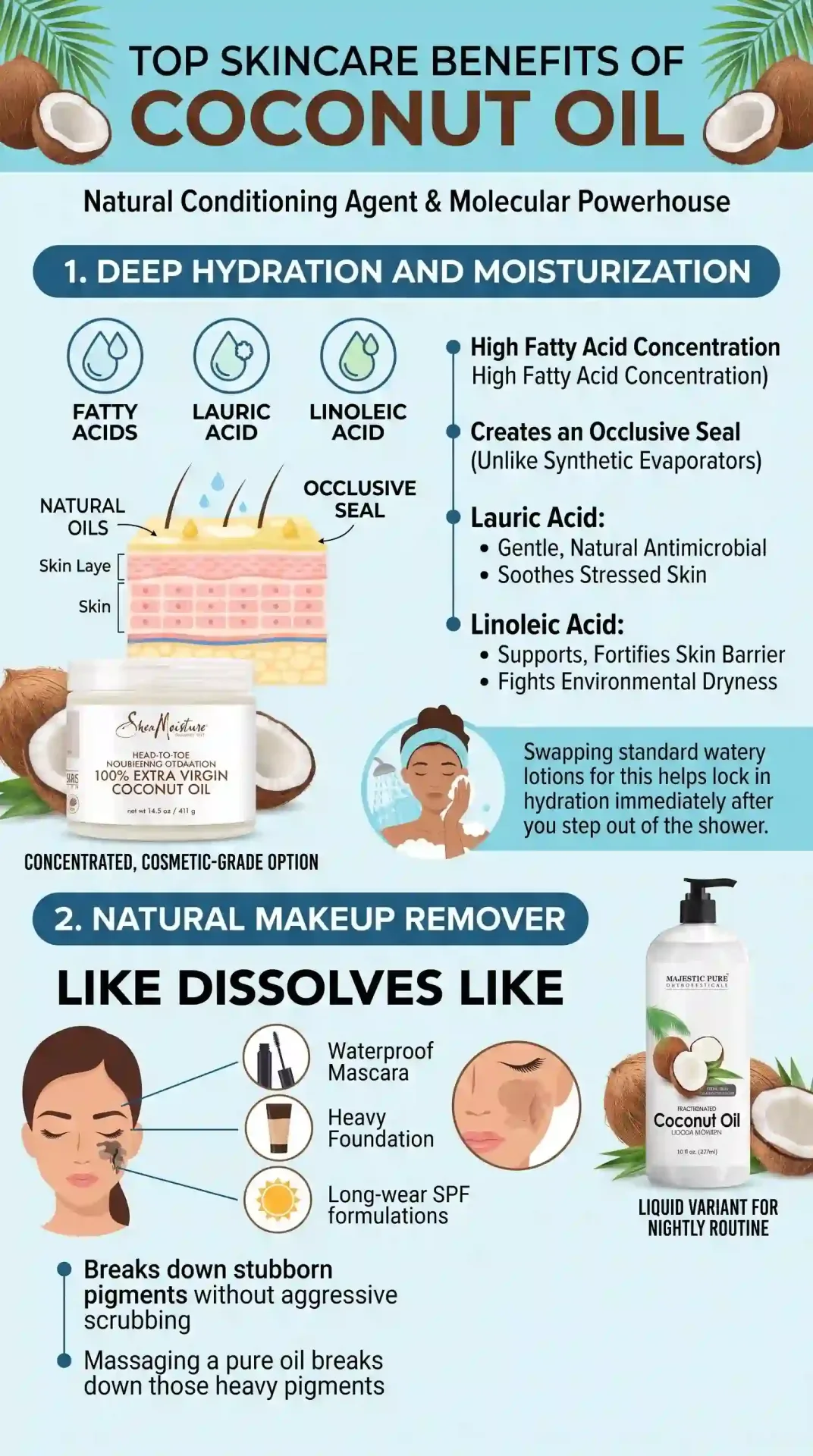
The primary reason this ingredient feels so incredibly rich is its high concentration of fatty acids. Unlike lightweight synthetic moisturizers that evaporate quickly, natural oils create an occlusive seal. Lauric acid makes up nearly half of its composition, acting as a gentle, natural antimicrobial agent that helps soothe visibly stressed skin. Additionally, the presence of linoleic acid works to support and fortify the skin barrier against environmental dryness. If your body feels like sandpaper by mid-winter, swapping standard watery lotions for a concentrated, cosmetic-grade option like SheaMoisture 100% Extra Virgin Coconut Oil Head to Toe Nourishing Hydration helps lock in hydration immediately after you step out of the shower. It melts on contact, leaving limbs remarkably soft and deeply conditioned.
Natural Makeup Remover
Like dissolves like. That is the fundamental rule of oil cleansing. Waterproof mascara, heavy foundation, and long-wear SPF formulations bind to the natural oils on our face, making them stubbornly resistant to standard foaming cleansers. Massaging a pure oil over your makeup breaks down those heavy pigments without aggressive scrubbing. If scooping solid oil from a jar feels too messy for your nightly routine, keeping a liquid variant like Majestic Pure Fractionated Coconut Oil near your sink allows you to pump exactly what you need onto a soft cotton pad for frictionless makeup removal.
How to Use Coconut Oil for Face & Body
Finding the right rhythm matters immensely. We see endless comments asking how to use coconut oil for the facewithout causing a massive breakout or feeling like a greasy mess. Success is entirely dependent on methodology.
Step 1: Choose the right oil.
You cannot just grab any random jar from the baking aisle. You specifically want cold-pressed unrefined coconut oil. Commercial heat processing and bleaching destroy the delicate, beneficial compounds. For a premium, raw option that hasn’t been chemically deodorized, keeping a dedicated jar of Viva Naturals Organic Extra Virgin Coconut Oil exclusively on your vanity ensures you are getting the purest botanical benefits.
Step 2: Cleansing.
Always start with a clean canvas. If you are using it as a moisturizer rather than a cleanser, wash your face thoroughly and leave the skin slightly damp. Oil traps whatever is underneath it, so trapping dirt is a recipe for disaster.
Step 3: Application. Let’s break down exactly how to apply coconut oil to face areas properly. Take a mere pea-sized amount. Warm it between your palms until it melts entirely into a fluid serum. Press it gently into your damp skin rather than aggressively rubbing it around. This pressing technique is the golden rule for anyone figuring out how to use coconut oil on face effectively without suffocating the pores. If you watch estheticians demonstrate how to use coconut oil in face massage routines or gua sha, you will notice they always use a light touch and frequently wipe away excess residue.
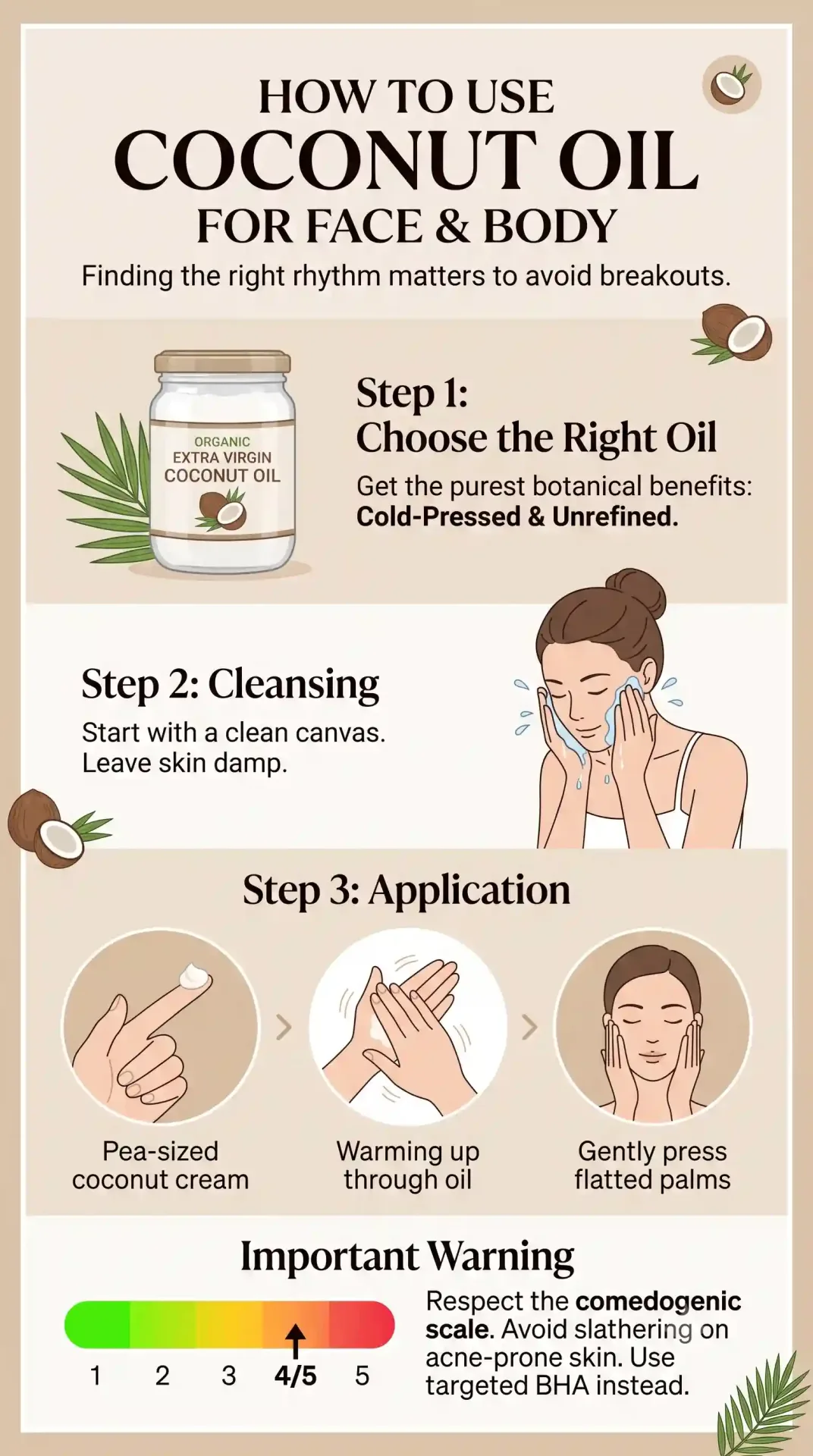
Important Warning: You have to respect the comedogenic scale. This metric measures how likely an ingredient is to clog your pores. Coconut oil ranks as a 4 out of 5, making it highly comedogenic. If you have acne-prone skin, slathering a heavy oil on your jawline will likely trigger breakouts. Those with oily profiles searching for the right coconut oil for face application should probably stick to using it strictly on their body. Instead of forcing heavy oils on congestion-prone skin, keep your facial pores remarkably clear with a targeted chemical liquid like Paula’s Choice SKIN PERFECTING 2% BHA Liquid Exfoliant.
Does Coconut Oil Help Dark Circles?
The internet is flooded with wild claims regarding coconut oil for dark circles, with many hoping to erase years of genetics, bone structure, or sleep deprivation overnight. We need to set realistic expectations.
Does coconut oil help dark circles disappear completely? No. Topical ingredients cannot alter your genetics or cure vascular pooling beneath the skin. However, what it does do is deliver a concentrated dose of natural vitamin E and intense moisture to visibly plump the delicate, paper-thin under-eye area. Plump, highly moisturized skin reflects light better, which makes shadows look far less severe and the overall eye contour appear remarkably brighter and less fatigued.
How-to: Dip the pad of your ring finger lightly into the oil. Tap it gently along the orbital bone—the hard bone right above your cheek. Do not drag or pull the skin. The warmth of your skin will allow the oil to naturally migrate upward toward the lash line safely.
Practical Beauty Tips with Coconut Oil
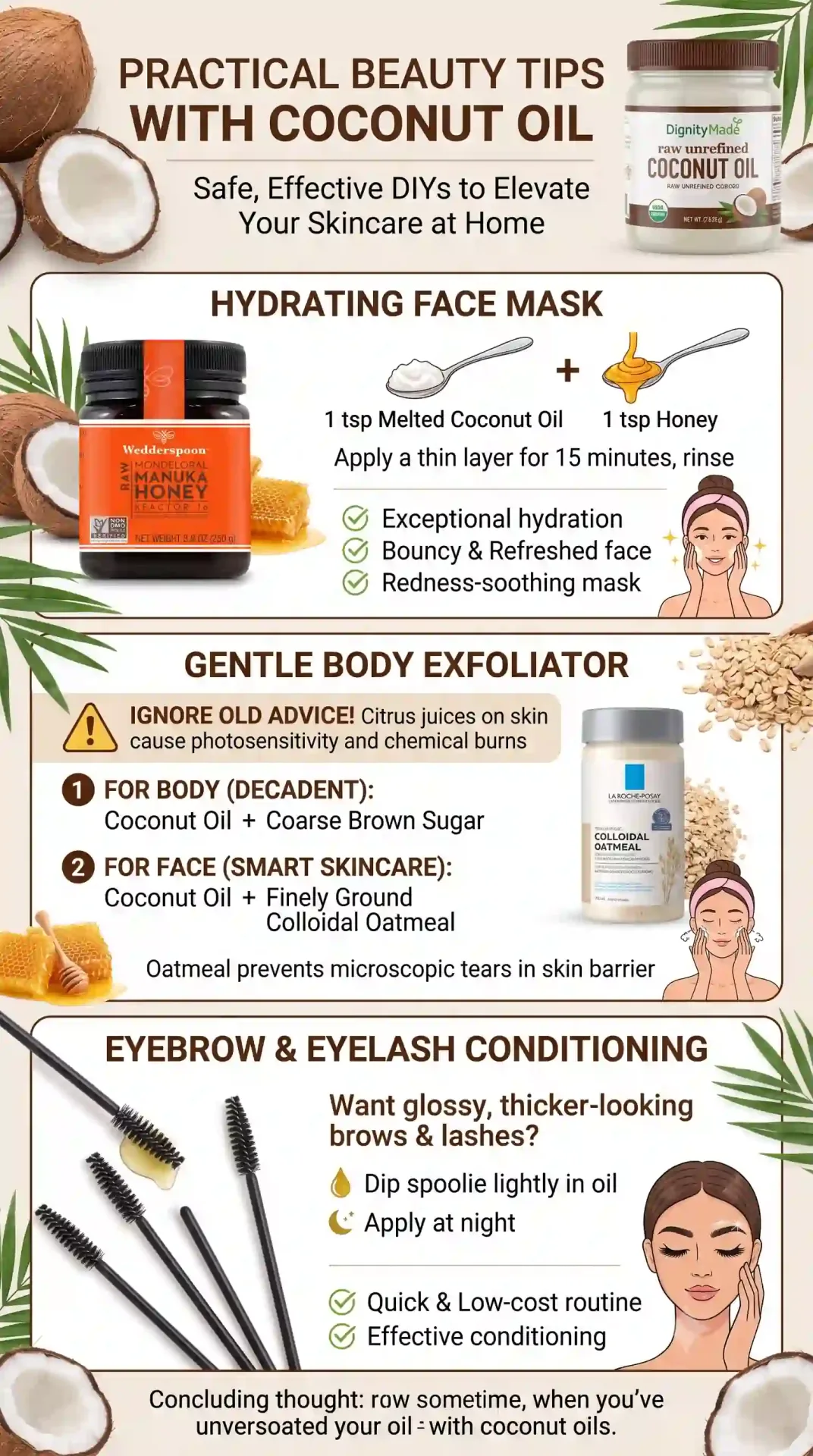
Ready for some safe, effective DIYs? These specific beauty tips with coconut oil mimic high-end spa treatments right at home. For anyone wanting to safely elevate their skincare with coconut oil, these recipes skip the harsh, highly acidic kitchen ingredients entirely.
Hydrating Face Mask
A simple mix of oil and raw honey creates a beautiful, redness-soothing mask that delivers intense moisture. Blending your oil with a robust, natural humectant like Wedderspoon Raw Premium Manuka Honey KFactor 16 provides exceptional hydration that leaves the face looking bouncy and refreshed. Mix one teaspoon of melted oil with one teaspoon of honey, apply a thin layer, and rinse with warm water after fifteen minutes.
Gentle Body Exfoliator
Please, ignore old internet advice telling you to mix fresh lemon juice into your scrubs. Citrus juices on the skin cause severe photosensitivity and can lead to chemical burns when exposed to sunlight. Instead, practice smart skin care with coconut oil by mixing it with coarse brown sugar for a decadent body scrub. If you want a physical exfoliant for the face, use finely ground colloidal oatmeal instead of sugar to prevent microscopic tears in your skin barrier.
Eyebrow and Eyelash Conditioning
Want glossy, thicker-looking brows? A tiny spoolie brush dipped lightly in oil works wonders for nighttime conditioning. These quick coconut oil beauty tips add up to a highly effective, low-cost routine. Beginners constantly asking how to use coconut oil for skin care usually focus on their cheeks and overlook the brows entirely.
Common Mistakes to Avoid When Using Coconut Oil for Skin
Even the most natural ingredients can cause chaos if misused. When assessing pure coconut oil for skin care, avoiding these major pitfalls is just as important as the application itself.
- Mistake 1: Using it as a Sunscreen. Let’s clear this up immediately. Coconut oil does not act as a sunscreen. It offers an estimated SPF of around 4, which is essentially zero protection against harmful UVA and UVB rays. Relying on it to prevent sunburn or melasma is dangerous. You must use a properly formulated, broad-spectrum SPF daily.
- Mistake 2: Applying it over active acne breakouts. Slathering a heavy, occlusive barrier over angry, active pimples traps the bacteria and heat inside the pore, making the breakout significantly worse and more painful.
- Mistake 3: Using refined/chemical-processed coconut oil. Buying the cheapest jar meant for high-heat cooking means you are putting an oil on your skin that has been bleached and stripped of its natural antioxidants.
FAQs About Coconut Oil for Skin Care
Can I leave coconut oil on my face overnight? Yes, but with caveats. If you have incredibly dry, flaky, or mature skin, leaving a thin layer on overnight as a “slugging” step can lock in serious moisture. However, if your skin leans normal-to-oily, it is best used as a wash-off mask or makeup remover to prevent clogged pores.
Is coconut oil good for all skin types? No ingredient is universally perfect. It is phenomenal for dry skin, eczema-prone body areas, and normal skin types. However, as mentioned regarding the comedogenic scale, those with acne-prone or highly reactive skin should approach facial application with extreme caution.
How do I incorporate it without feeling greasy? The trick is applying it to damp skin. If you want to master how to use coconut oil for skin effectively on your body, apply it the second you step out of the shower before toweling off. The water helps the oil spread thinner and absorb faster.
Conclusion
Upgrading your bathroom cabinet doesn’t always require spending hundreds of dollars on synthetic serums. While incorporating coconut oil for skin care certainly requires a little strategic thinking regarding your specific skin type and the comedogenic scale, the glowing, deeply hydrated results speak for themselves. Stick to cold-pressed varieties, respect your skin barrier, and enjoy the simplicity of natural beauty.