
Disclosure: This post may contain affiliate links. We may earn a small commission at no extra cost to you if you make a purchase through these links. Please read our full Disclaimer for more details.
At-home lifting devices have transformed the modern vanity, offering professional-grade technology for visible skin rejuvenation right from your bathroom. As these tools gain popularity, understanding microcurrent contraindications becomes a vital part of your responsible skincare practice. While devices like the NuFace or Foreo can help improve facial muscle tone and brightness, they are not appropriate for everyone. Before you integrate these tools into your daily routine, it is essential to check if your specific medical history or recent procedures require a pause. For a deeper look at the foundational science and full usage protocols, you can find more information in our comprehensive microcurrent pillar guide.
What Are Microcurrent Contraindications?
Staying informed about microcurrent contraindications ensures you get the best results without compromising your skin health. These contraindications refer to specific medical conditions, recent cosmetic procedures, or life stages where using electrical stimulation should be avoided or delayed to prevent unwanted side effects. When you understand your skin’s current state, you avoid common pitfalls and keep your complexion radiant and safe.
Microcurrent and Injectables: Timing Your Treatments
Guidelines for Using Microcurrent After Botox
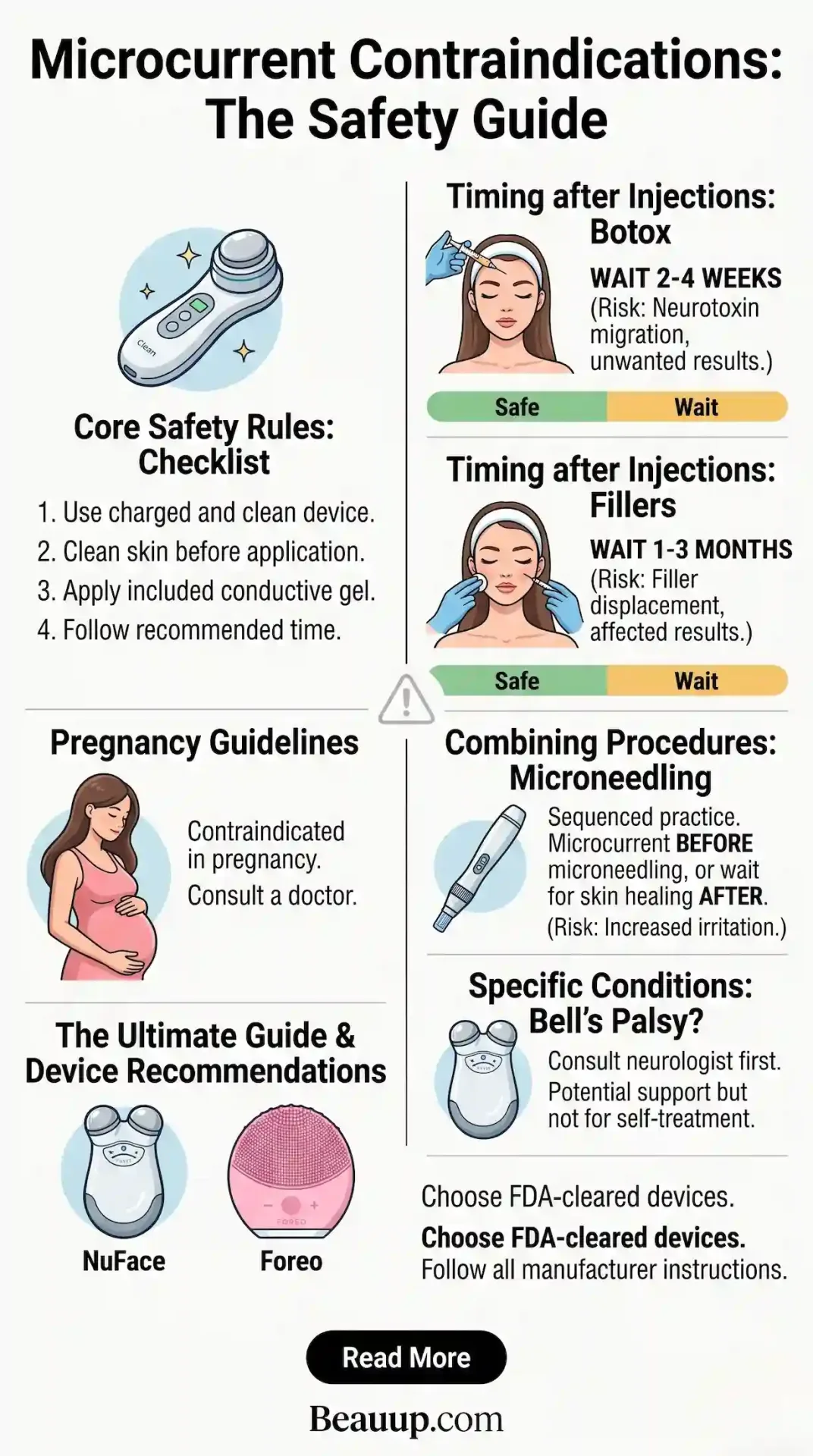
Many beauty enthusiasts wonder about the best timing for microcurrent after botox. Aesthetic professionals typically suggest a waiting period of two to four weeks post-injection. Waiting for this window helps prevent the potential migration of neurotoxins to unintended muscles, which could alter your desired cosmetic result.
Safety Best Practices for Microcurrent After Fillers
If you have recently undergone dermal fillers, applying microcurrent after fillers requires caution. Experts generally recommend waiting at least two to four weeks to allow the product to settle fully within the tissue. Using a device too soon may interfere with the placement of the filler, potentially compromising the aesthetic outcome you paid for.
Combining Microcurrent With Other Clinical Skincare Procedures
Navigating Microcurrent and Microneedling
When mapping out your clinical routine, precision is key. Understanding the relationship between microcurrent and microneedling helps you avoid unnecessary skin irritation. You should perform microcurrent treatments before your microneedling session or wait until your skin barrier has completely recovered. Applying electrical currents to compromised, freshly needled skin often causes severe discomfort and should be avoided entirely.
Microcurrent Safety During Specific Life Stages
Understanding Microcurrent Pregnancy Guidelines
Safety protocols are strict when it comes to microcurrent pregnancy applications. Due to a total lack of clinical safety trials involving pregnant individuals, manufacturers classify these devices as contraindicated during this life stage. You should always consult your obstetrician before introducing any new electronic wellness device during your pregnancy journey.
Addressing Specific Aesthetic and Medical Conditions
Can You Use Microcurrent for Bell’s Palsy?
Researching microcurrent for bell’s palsy often leads to questions about at-home tools. While some studies suggest low-level electrical stimulation may help support muscle tone, you must consult your neurologist or physical therapist before attempting to use a NuFACE Trinity+ Starter Kit for this purpose. We make no claims that these consumer devices treat or cure medical conditions; they are intended for cosmetic wellness purposes only.
The Reality of Microcurrent for Hyperpigmentation
While the primary goal of these devices is muscle contouring, many users seek microcurrent for hyperpigmentationimprovements. The device’s ability to enhance micro-circulation may help support a more radiant, even skin tone over time. To maximize these brightening effects, consider pairing your session with a high-performance serum like SkinCeuticals C E Ferulic or the exfoliation power of Sunday Riley Good Genes All-In-One Lactic Acid Treatment for visible improvements in texture.
Choosing and Using FDA-Cleared At-Home Devices Safely
Always prioritize devices that are FDA-cleared, as they are held to standardized safety thresholds. Using a professional-standard tool like the NuFACE Trinity+ Starter Kit or the FOREO BEAR 2—both of which feature proprietary anti-shock systems—provides peace of mind that your treatment is both effective and controlled.
Conclusion & Next Steps
Navigating the nuances of microcurrent contraindications is the hallmark of a savvy skincare editor. By respecting waiting periods after injectables and prioritizing your skin’s barrier health, you ensure long-term, visible improvements. Always remember the golden rule: when in doubt, consult your dermatologist or primary care physician before adding new tech to your routine. Don’t forget to protect your progress with a reliable, non-comedogenic sunscreen like EltaMD UV Clear Broad-Spectrum SPF 46. For a complete breakdown of how to build your perfect, safe, and effective at-home regimen, revisit our full comprehensive microcurrent pillar guide on Beauup.com.