Disclosure: This post may contain affiliate links. We may earn a small commission at no extra cost to you if you make a purchase through these links. Please read our full Disclaimer for more details.
You buy a lipstick that looks stunning on your favorite influencer, only to swipe it on and realize it completely washes you out. We have all been there. The frustration of constantly asking: what lipstick color is best for my skin tone; usually stems from missing one critical piece of information: your skin’s undertone. While your surface skin tone (fair, medium, deep) changes with the seasons and sun exposure, your undertone remains perfectly constant. Understanding this underlying hue is the only way to build a lipstick wardrobe that effortlessly enhances your natural complexion. Consider this guide your personal best lipstick for my skin tone quiz. Let’s diagnose your exact undertone and find the lip colors you should actually be wearing.
4 Foolproof Tests to Find Your Skin Undertone
Forget complicated color theory. You can determine your skin’s true undertone right now using these four simple diagnostic tests. Do this in natural daylight with a bare face for the most accurate results.
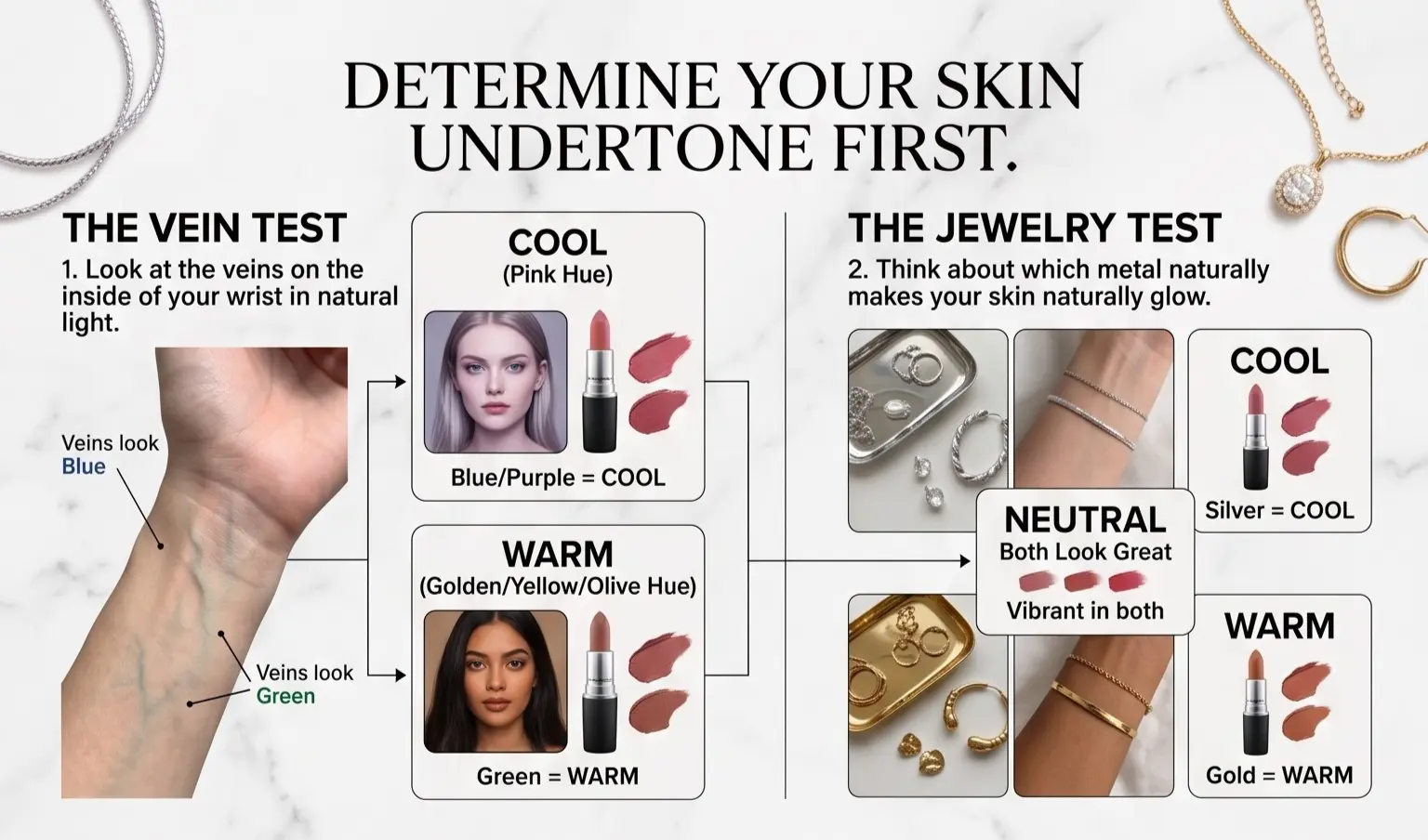
1. The Vein Test
Examine the veins on the inside of your wrist.
- Cool: Your veins look distinctively blue or purple.
- Warm: Your veins have a green or olive tint.
- Neutral: You see a mix of both blue and green, making it hard to declare just one color.
2. The White T-Shirt Test
Grab a pure white piece of clothing (or a blank piece of printer paper) and hold it up to your face in natural light.
- Cool: Your skin looks slightly pink, rosy, or blue next to the stark white fabric.
- Warm: Your face pulls more yellow, golden, or peachy.
- Neutral: Your skin simply looks ashen or gray, without an obvious lean toward pink or yellow.
3. The Sun Exposure Test
Think about how your skin reacts when you spend a day at the beach.
- Cool: You burn easily, turn red, and struggle to hold a tan.
- Warm: You tan quickly and develop a golden-brown hue without burning.
4. The Jewelry Test
Which metal naturally brightens your complexion?
- Cool: Silver and platinum jewelry make your skin look crisp and awake.
- Warm: Gold jewelry makes your natural undertones pop.
- Neutral: You look equally vibrant in both metals.
What Lipstick Matches My Skin Tone? (The Results)
Now that you know your undertone, finding the right lipstick color becomes a straightforward process of elimination. Here is your ultimate cheat sheet to match your lip color to your skin tone perfectly.
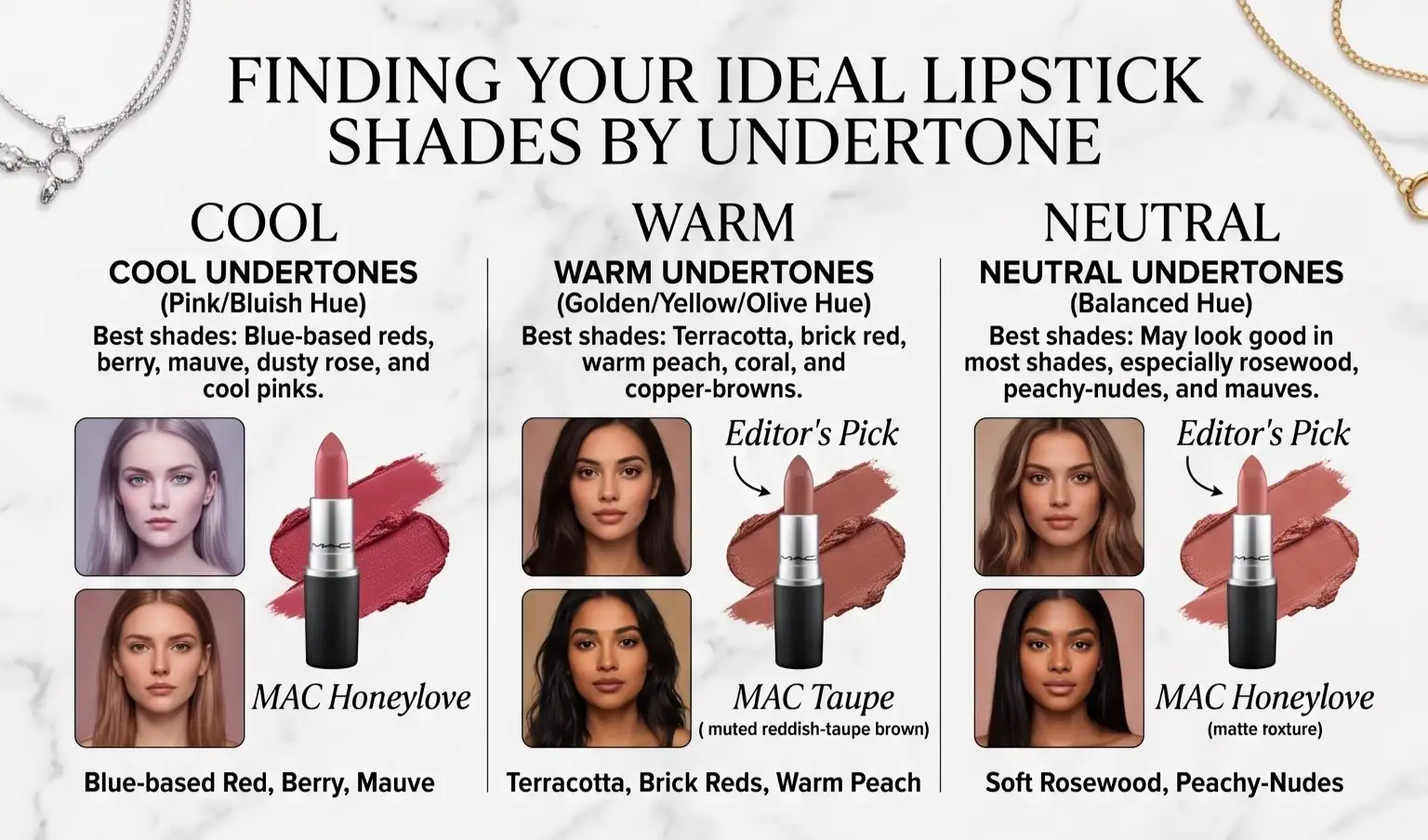
Best Lipstick Colors for Cool Undertones
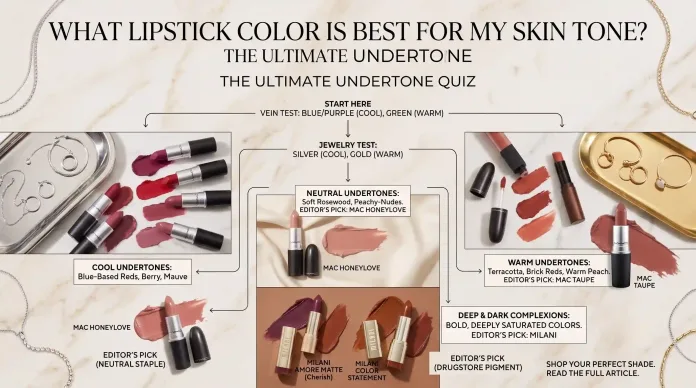
Your complexion thrives on colors that share your blue and pink base. Reach for icy pinks, dusty mauves, bold magentas, and classic blue-based reds. These shades will make your skin look crisp and create the illusion of whiter teeth.
- Shades to avoid: Orange-reds, pale yellows, and warm corals. They will clash with your skin and make you look tired or sallow.
Best Lipstick Colors for Warm Undertones
Warm undertones radiate next to earthy, fiery hues. You want lip colors that mirror your natural golden glow. Look for terracotta, brick red, burnt orange, warm peach, and copper-browns.
- Editor’s Pick: Finding a warm nude that doesn’t look muddy is notoriously tricky. The MAC Matte Lipstick in Taupe (available on Amazon) is a flawless muted reddish-brown. It flatters golden and olive undertones beautifully, providing a sophisticated everyday look.
Best Lipstick Colors for Neutral Undertones
If your tests yielded mixed results, you hit the genetic jackpot. You have the flexibility to wear almost anything. However, neutral shades like soft rosewood, peachy-nudes, and sheer berry tones look particularly effortless on you.
- Editor’s Pick: The MAC Honeylove Lipstick is an exceptional neutral staple. It provides a highly pigmented, light beige-toned rose finish that prevents the dreaded “ghost lip” effect often seen on lighter, neutral complexions.
Fine-Tuning by Surface Skin Tone
Undertone dictates the color family, but your surface skin tone dictates the depth of the lipstick you should choose.
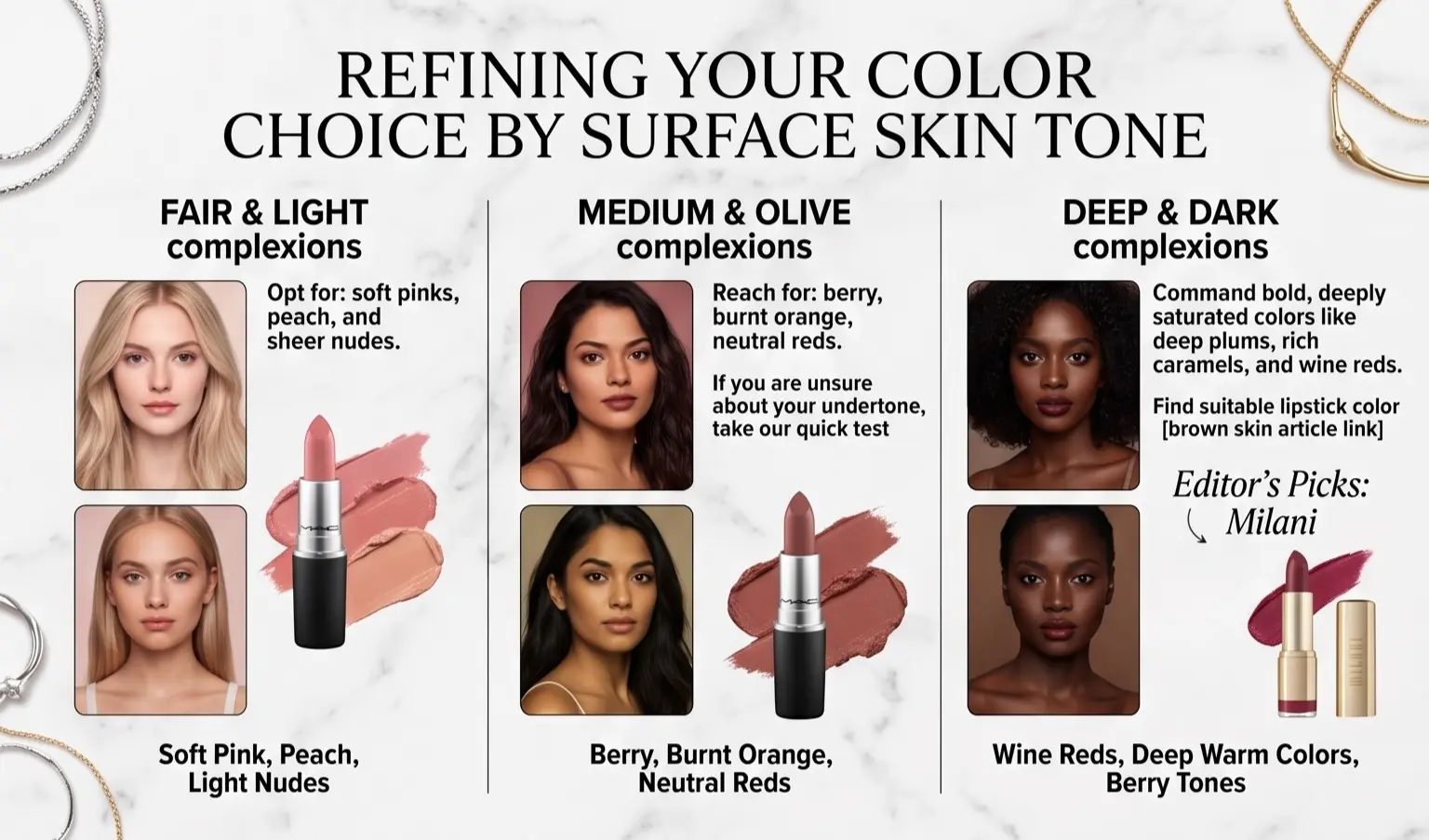
- Fair & Light Complexions: Soft, delicate shades work best. Opt for light pinks, peach, and sheer nudes. Avoid excessively dark or vampy colors for daytime wear, as they can overpower a light complexion.
- Medium & Olive Complexions: You handle rich, vibrant pigments beautifully. Berry tones, burnt oranges, and neutral reds look incredible. Steer clear of extremely pale, milky nudes that blend right into your skin.
- Deep & Dark Complexions: Deep skin tones command bold, deeply saturated colors. Plums, rich caramels, wine reds, and chocolate browns look spectacular. You need formulas that deliver intense color payoff without turning ashen.
- Editor’s Picks: Budget-friendly drugstore options often pack incredible pigment for deeper skin. The Milani Amore Matte Lip Crème in Cherish delivers a highly saturated liquid-to-matte formula that locks opaque color onto heavily melanated lips. Alternatively, the classic Milani Color Statement Lipstick offers incredible pigmentation and a smooth, nourishing finish.
(If you have a deeper complexion and want a highly curated list of shades specifically tested for melanin-rich skin, dive into our dedicated guide on what color of lipstick is best for brown skin)
Next Steps to Perfect Your Makeup Routine
Once you identify your undertone and map out your safest color families, shopping for makeup becomes incredibly efficient. You no longer have to guess if a shade will work; you know the exact science behind it.
To take your expertise a step further and learn how to manipulate these colors based on your lip shape (thin vs. full) and preferred texture (matte vs. glossy), read our comprehensive Ultimate Guide on How to Choose The Best Lipstick Color.