Disclosure: This post may contain affiliate links. We may earn a small commission at no extra cost to you if you make a purchase through these links. Please read our full Disclaimer for more details.
Retinoids Explained: The Ultimate Guide to Vitamin A Derivatives
Standing in the skincare aisle staring at dozens of anti-aging serums can feel completely overwhelming. You want smoother, brighter skin, but the overlapping labels and varying percentages make it nearly impossible to know where to start. Understanding the breakdown of retinol vs retinoid vs tretinoin is the smartest move you can make for your nighttime routine. This guide serves as your ultimate playbook to retinoids for beginners, cutting through the marketing noise to clarify varying potencies. We will help you navigate the science safely and confidently. By the end, you will know exactly which Vitamin A derivative belongs on your bathroom counter.
What is a Retinoid? The Umbrella Term Explained
To clear up the confusion, we have to start at the top. When people ask what is a retinoid, they are actually asking about an entire family of skincare ingredients. Retinoids are Vitamin A derivatives. Think of this term as an umbrella that covers everything from the gentlest drugstore creams to the most potent tubes handed to you by a doctor.
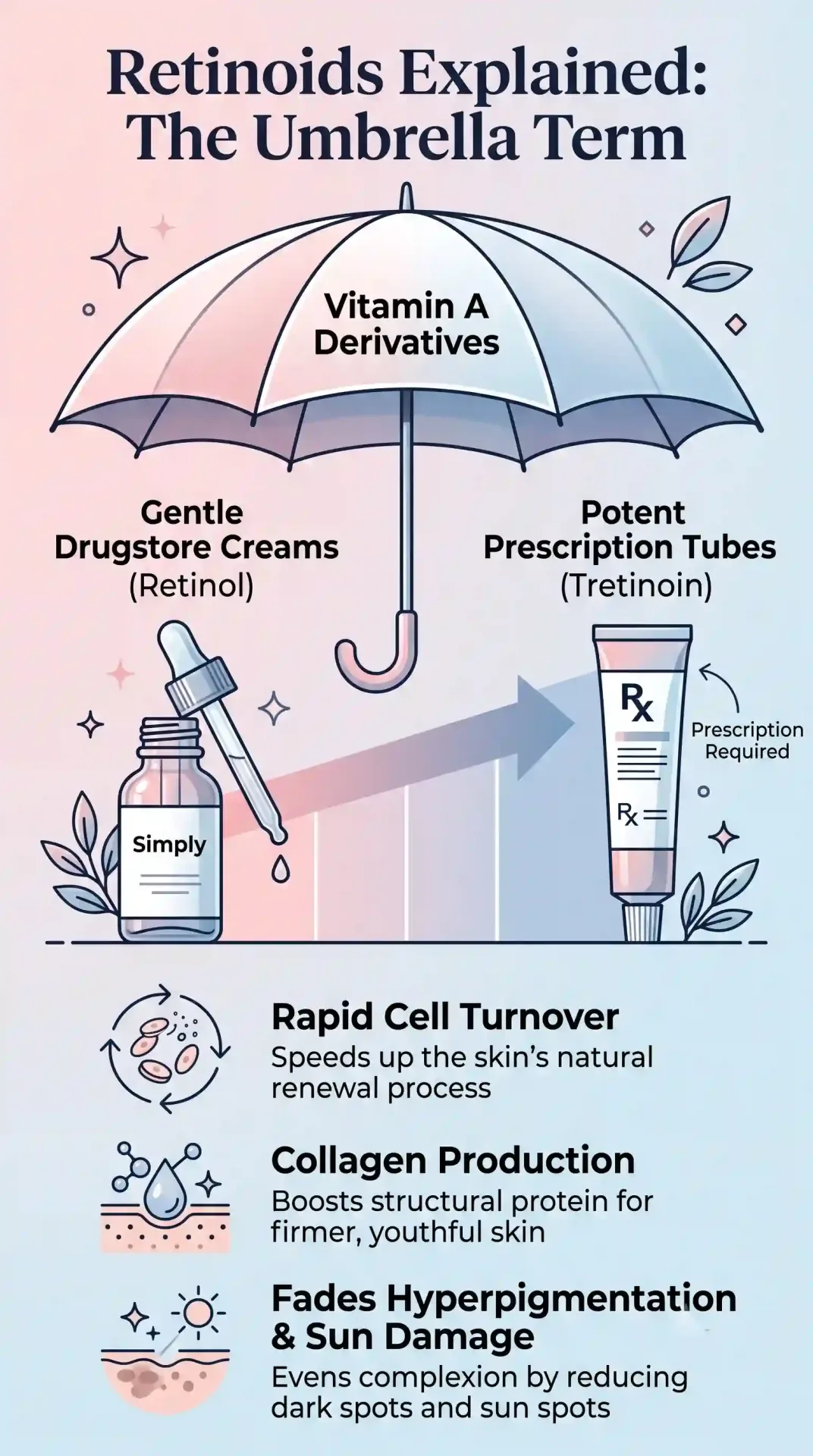
These ingredients work by communicating directly with Retinoic acid receptors in the skin. Once applied, they act like a drill sergeant for your face, signaling sluggish cells to wake up and behave like younger, healthier cells. They are formulated to support rapid Skin cell turnover / Cell renewal and encourage visible Collagen production over time. Consistent use of a well-formulated retinoid may help improve the appearance of Photoaging / Sun damage, smooth out rough texture, and fade visible Hyperpigmentation. It is the closest thing the beauty industry has to a magic wand. But potency matters.
The Core Difference Between Retinol and Retinoid
You hear these two words tossed around interchangeably. They are not the same thing. The easiest way to grasp the difference between retinol and retinoid is the old square-and-rectangle rule. All retinols are retinoids, but not all retinoids are retinols.
The distinction usually comes down to accessibility and strength. When weighing prescription retinoid vs over the counter retinol, the terminology shifts. In clinical settings, dermatologists use the word “retinoid” to describe Prescription-strength formulas. These hit the skin hard and fast. On the flip side, “retinol” is simply the most common OTC (Over-the-counter) skincare variant. You can buy it at CVS, Target, or Sephora without a doctor’s note. It is gentler, more stable for mass-market packaging, and requires patience.
Tretinoin vs Retinol: Which is Better for Your Skin?
This is the ultimate skincare showdown. We are comparing the heavy hitter against the daily driver. When evaluating tretinoin vs retinol, you are essentially choosing between a fast-acting prescription and a slow-and-steady cosmetic serum. So, which is better: retinol or tretinoin? The answer depends entirely on your skin’s resilience and your specific goals.
The Chemical Conversion: Retinol vs Retinoic Acid
To understand why one is stronger, we need a quick chemistry lesson on retinol vs retinoic acid. Your skin can only use Vitamin A when it is in the form of retinoic acid.
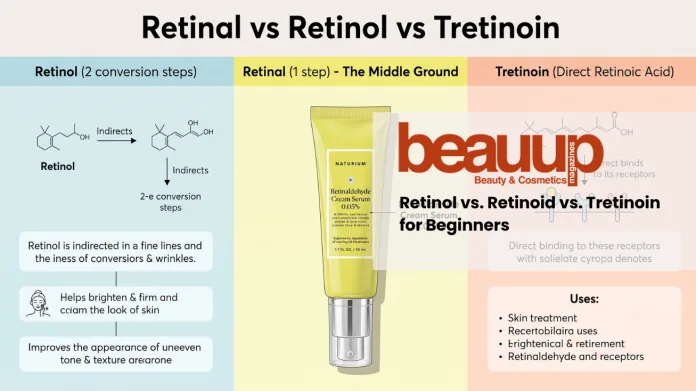
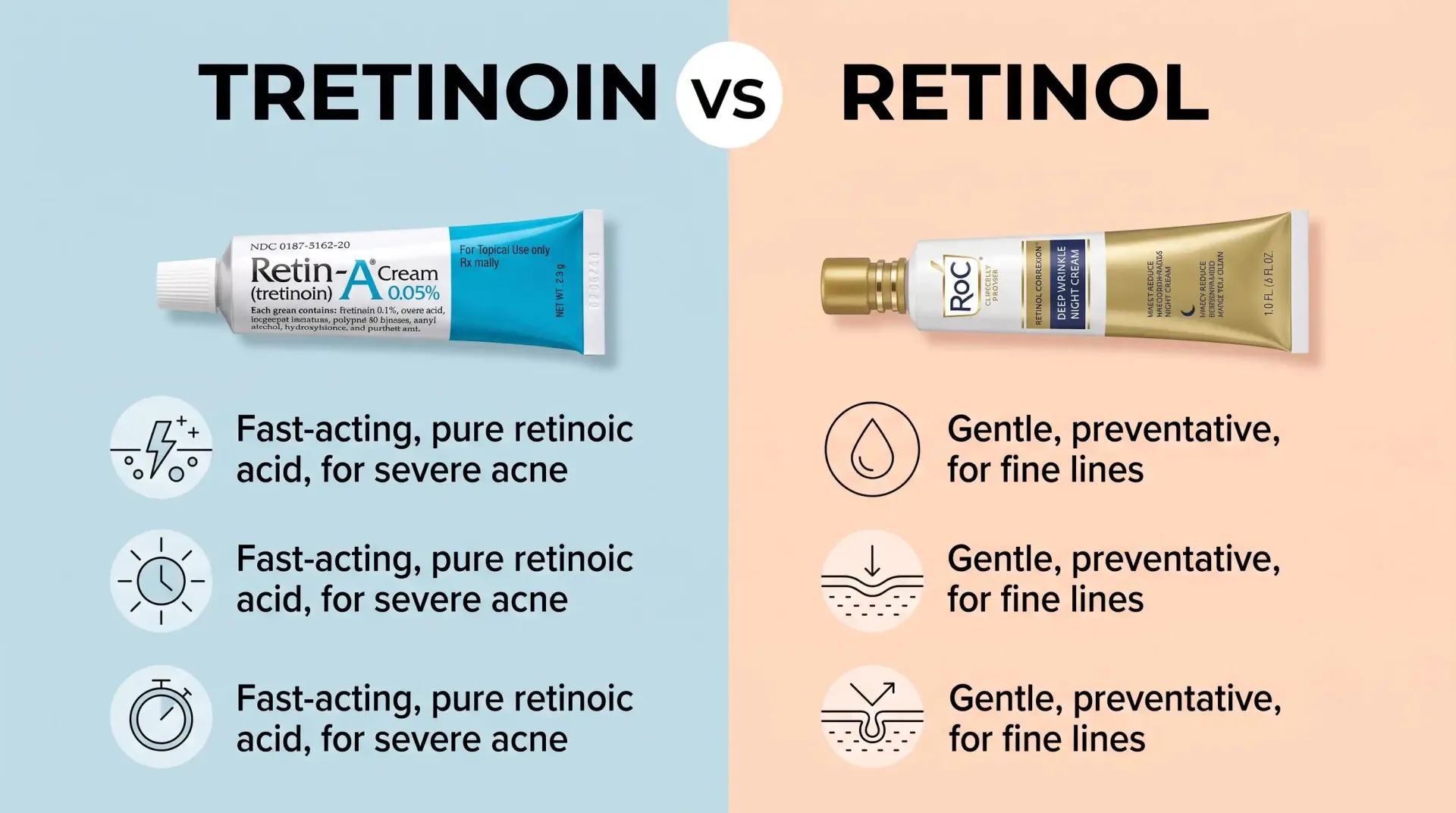
Tretinoin (often recognized by the brand name Retin-A) is pure retinoic acid. The moment it touches your face, it goes to work. OTC retinol, however, is a precursor. Once applied, your skin has to use its natural enzymes to convert the retinol into retinaldehyde, and then finally into retinoic acid. This two-step conversion process means retinol is significantly weaker. It is gentler on the skin barrier, but the visible results take much longer to surface.
Tretinoin vs Retinol for Wrinkles and Aging
If your primary goal is softening fine lines, both ingredients are stellar choices. Comparing tretinoin vs retinol for wrinkles comes down to speed versus comfort. Tretinoin may offer more rapid visible improvement for deep lines and stubborn photodamage due to its direct cellular communication.
Consistent OTC retinol use can still yield excellent preventative results without the intense flaking phase. A cult-favorite drugstore option designed to smooth fine lines over time is the RoC Retinol Correxion Deep Wrinkle Night Cream, which offers a stable formulation that is gentle enough for consistent nightly use. It is a fantastic starting point for anyone looking to dip their toes into anti-aging skincare.
Tretinoin vs Retinol for Acne and Texture
Breakouts require a slightly different strategy. Looking at tretinoin vs retinol for acne, the prescription route usually wins for severe cases. A Board-certified dermatologist will often prescribe tretinoin to clear out stubborn, congested pores and mitigate deep cystic acne. It forces cell turnover so rapidly that pores struggle to clog.
OTC retinol may help manage mild, occasional breakouts and refine general skin texture, but it is rarely robust enough to clear persistent acne on its own.
Retinal vs Retinol vs Tretinoin: The Middle Ground
What if retinol is too weak, but you aren’t ready for a prescription? Enter retinaldehyde, commonly known as retinal.
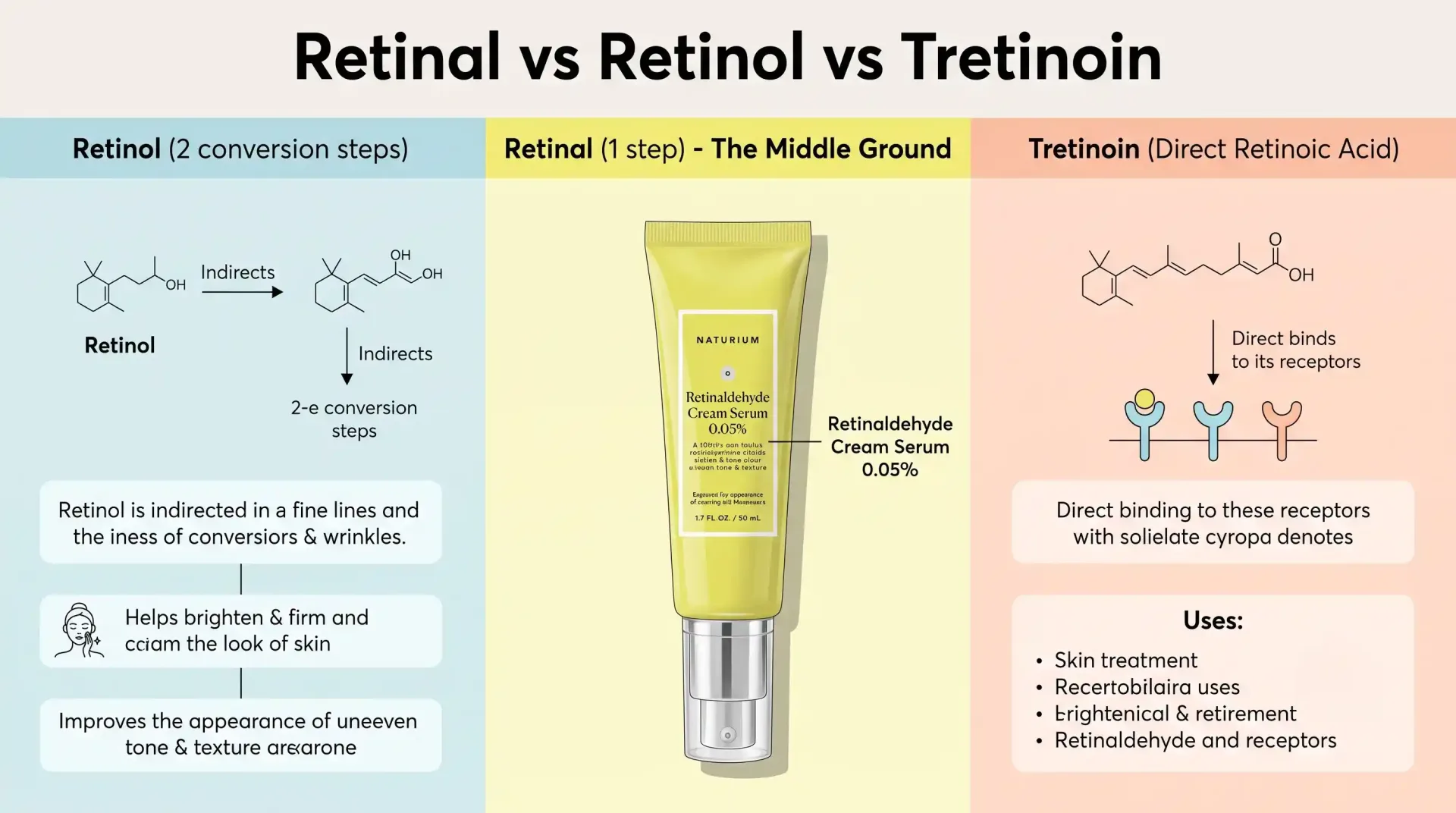
When you compare retinal vs retinol vs tretinoin, retinal sits perfectly in the center. Remember that chemical conversion process we talked about? Retinal only requires one conversion step to become retinoic acid, making it up to ten times more efficient than standard retinol. For those seeking a potent middle ground, stepping up to the Naturium Retinaldehyde Cream Serum 0.05% provides noticeable skin-smoothing benefits without the immediate need for a doctor’s visit or a telehealth consultation.
Answering Your Top FAQs: Is Tretinoin the Same as Retinol?
Even with the science laid out, a few common questions always pop up in the dermatology clinic. Let’s clear the air. First and foremost, is tretinoin the same as retinol? Absolutely not. Tretinoin is a prescription-only, pure retinoic acid. Retinol is an over-the-counter precursor.
Does Tretinoin Work Faster Than Retinol?
Yes. Because it skips the conversion process entirely, tretinoin binds directly to your cellular receptors. When asking does tretinoin work faster than retinol, clinical timelines usually show visible improvements in texture and tone from tretinoin in about 8 to 12 weeks. OTC retinol often requires 3 to 6 months of diligent use to show similar, albeit milder, results.
What Percentage of Retinol Equals Tretinoin?
People love skincare math. Unfortunately, it doesn’t work that way. Trying to figure out what percentage of retinol equals tretinoin is a wild goose chase. Because every individual’s skin converts retinol to retinoic acid at a different rate, a direct mathematical equivalent simply does not exist. A 1% retinol serum will never pack the exact same biological punch as a 0.025% tretinoin cream.
Can I Use Retinol and Tretinoin Together?
Do not do this. If you are wondering can I use retinol and tretinoin together, the answer is a resounding no. Layering them will not double your anti-aging benefits. It will trigger massive irritation, chemical burns, and severe barrier compromise. Pick one derivative and stick with it.
Making the Right Choice: Retinol vs Retinoid vs Tretinoin
Navigating retinol vs retinoid vs tretinoin eventually comes down to analyzing your unique skin barrier. If you have never used an active ingredient in your life, diving straight into a prescription is a recipe for disaster. Your skin needs time to acclimate. You should almost always start at the bottom of the ladder with a low-percentage OTC product. Once your skin builds tolerance over several months, you can evaluate if you need to step up to retinaldehyde or book an appointment for a prescription.
Application Tips: How to Apply Tretinoin for Beginners Without Peeling
The biggest hurdle with potent Vitamin A is the dreaded Skin purging / Retinization period. This phase brings redness, flaking, and temporary breakouts. Knowing how to apply tretinoin for beginners without peeling is a vital skill.
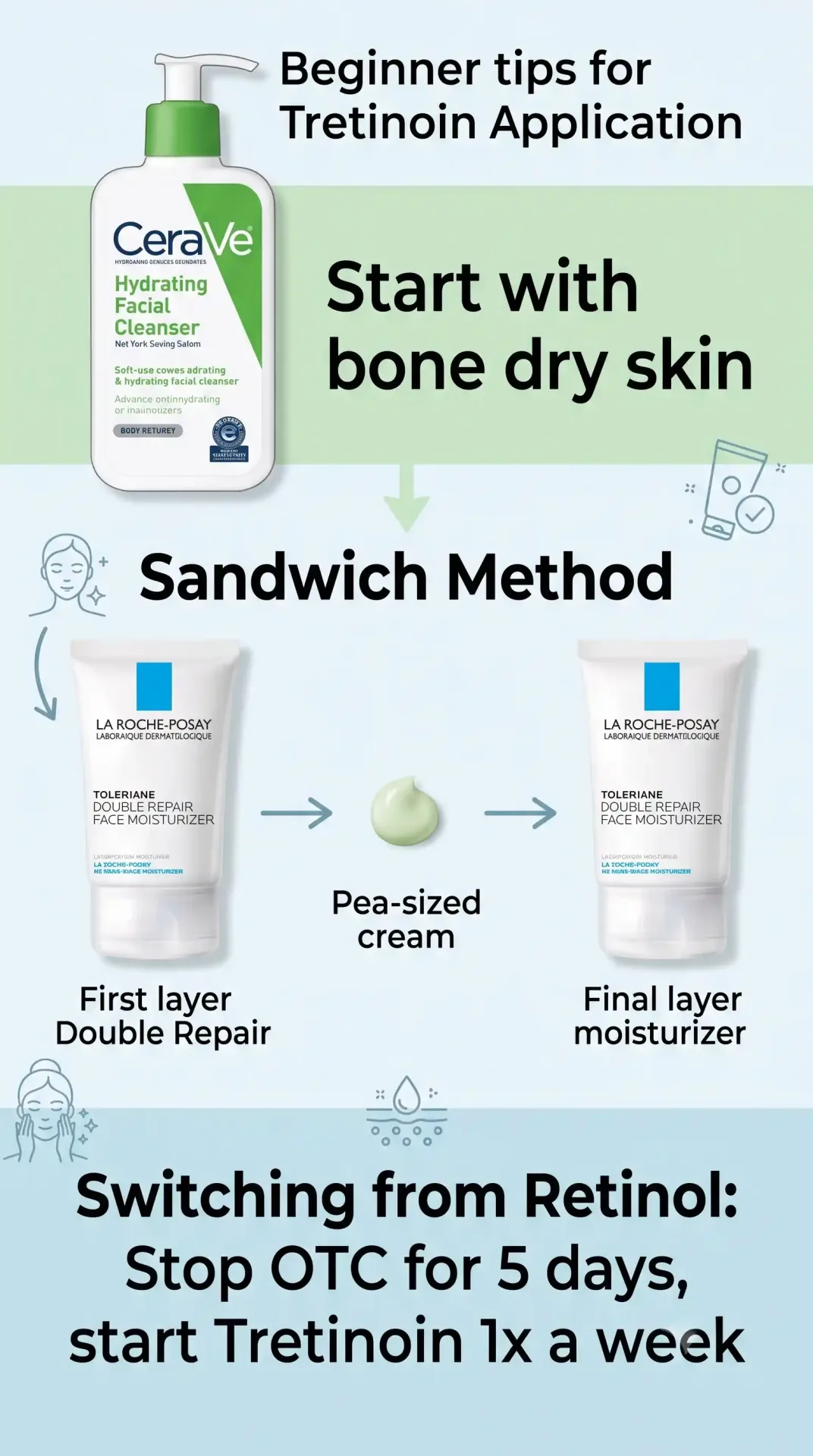
Start with a clean, dry canvas by washing away the day’s impurities using a non-stripping formula like the CeraVe Hydrating Facial Cleanser. Your skin must be bone dry before applying the active ingredient; damp skin increases absorption and drastically spikes irritation. If you are securing a tretinoin cream for beginners, ask your provider for the lowest possible dose—usually 0.025%—and apply a pea-sized amount only one or two nights a week.
Best Beginner Retinoid for Sensitive Skin
If your face turns red just looking at a new product, you need an extra layer of defense. The best beginner retinoid for sensitive skin is usually an encapsulated formula, but the real secret lies in your moisturizer. Embrace the “sandwich method.” To effectively sandwich your active ingredients and protect your barrier, applying a robust layer of the La Roche-Posay Toleriane Double Repair Face Moisturizer before and after your retinoid can dramatically reduce the chances of irritation while supporting crucial Skin barrier repair.
How to Switch From Retinol to Tretinoin Safely
Graduation day requires strategy. When figuring out how to switch from retinol to tretinoin, transition slowly. Stop using your OTC retinol completely for five days to let your skin rest. Introduce the prescription tretinoin just once a week for the first two weeks. Then, bump it to twice a week. If you experience burning or severe peeling, scale back immediately.
Conclusion
Building a skincare routine that actually works requires patience, strategy, and a bit of scientific literacy. The journey to a glowing complexion is a marathon, not a sprint. Whether you opt for a gentle drugstore formula or a heavy-duty prescription cream, consistency will always be your greatest asset. We hope this breakdown of retinol vs retinoid vs tretinoin empowers you to make the safest, most effective choice for your face.
If you are dealing with severe acne or deep visible signs of aging, consider consulting a telehealth provider or local dermatologist for a tailored prescription. If you are just starting out, grab a gentle OTC option and begin your journey tonight. Just remember one golden rule: because all Vitamin A derivatives increase sun sensitivity, defending your fresh skin cells during the day with a high-quality SPF, such as the EltaMD UV Clear Face Sunscreen, SPF 46, is absolutely non-negotiable.