Disclosure: This post may contain affiliate links. We may earn a small commission at no extra cost to you if you make a purchase through these links. Please read our full Disclaimer for more details.
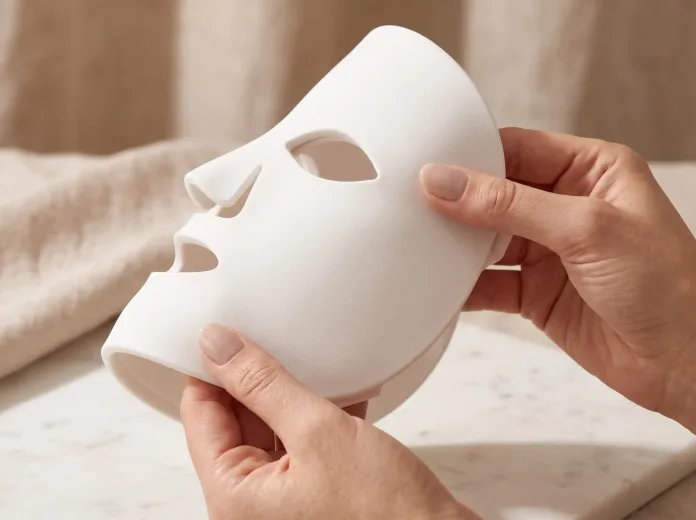
Scroll through your social feeds and you’ll eventually see someone wearing a glowing mask that looks like it came straight out of a sci-fi movie. Red light therapy masks have exploded in popularity, with claims ranging from clearer skin to smoother fine lines and a more radiant complexion. But do at-home LED face masks actually work, or are they just expensive light shows? In this guide, we break down the science behind LED and red light therapy masks, how the different wavelengths affect your skin, what the evidence actually shows, and who should (or shouldn’t) use them.
⚡ Ready to choose a device? See our full comparison of the 7 Best FDA-Cleared LED Face Masks of 2026.
What Is an LED Red Light Therapy Mask?

LED (Light Emitting Diode) therapy is a non-invasive treatment that uses specific wavelengths of light to support the skin’s natural processes. Unlike lasers or intense pulsed light (IPL), LED devices do not damage or heat the skin. They deliver low-level light energy that skin cells can absorb.
This technology isn’t new. NASA originally studied red and near-infrared light for plant growth and wound healing in space. Over time, researchers and dermatologists began exploring its potential for skin concerns such as signs of aging, acne, and redness.
At-home LED face masks are designed with lower power levels than professional devices so they can be used safely without supervision.
How LED Face Masks Work: Wavelengths Explained
Different colors of light penetrate the skin at different depths and are associated with different effects:
- Red Light (around 630–660 nm)
The most studied wavelength for skin. Red light is absorbed by mitochondria in skin cells and is linked to increased cellular energy (ATP). This is the mechanism behind claims of supporting collagen and improving the appearance of fine lines. - Near-Infrared (around 800–850 nm)
Penetrates deeper than red light. Often combined with red light in anti-aging masks. Associated with calming the look of redness and supporting recovery. - Blue Light (around 415 nm)
Primarily targets the surface of the skin. Blue light has been studied for its ability to affect acne-causing bacteria (Cutibacterium acnes). - Other Colors (Green, Yellow, etc.)
Far less researched for skin. Most evidence for LED masks centers on red, near-infrared, and blue light.
The key factors that determine whether an LED mask can be effective are:
- Correct wavelength
- Sufficient irradiance (power density)
- Consistent use over time

Do At-Home LED Face Masks Actually Work?
Yes — but with important caveats.
Clinical studies on red and near-infrared light have shown measurable improvements in skin texture, fine lines, and redness when devices deliver the right wavelengths at adequate power. However, at-home masks are intentionally less powerful than in-office LED panels or medical devices. This makes them safer for unsupervised use but also means results are typically more gradual.
Key points from the research and real-world use:
- Results are cumulative and require consistency (usually 3–5 times per week).
- Most people notice changes in skin tone and texture after 4–8 weeks of regular use.
- Dramatic “before and after” results seen online are often from professional treatments or combined with other skincare.
- Not every mask on the market delivers clinically relevant wavelengths or power. This is why FDA clearance matters for safety and basic efficacy standards.
In short: quality at-home LED masks can produce visible improvements, but they are not a replacement for professional treatments or a well-formulated skincare routine.
Proven Benefits of Red Light Therapy Masks
When used consistently with a proper device, red light therapy masks are associated with the following benefits:
- Supports the appearance of firmer skin — Through increased cellular energy and collagen support.
- Helps improve the look of fine lines — Gradual smoothing of early wrinkles with regular use.
- Can help manage mild acne — Blue light targets surface bacteria; red light helps calm the look of redness.
- Promotes a more even skin tone — May help fade the appearance of mild discoloration over time.
- Soothes the look of redness and irritation — Particularly near-infrared wavelengths.
These benefits are best viewed as supportive rather than transformative. LED masks work best as part of a broader routine that includes sunscreen, proper cleansing, and targeted actives.

Expected Timeline: When Will You See Results?
| Timeframe | What Most People Notice |
|---|---|
| 1–2 weeks | Slight improvement in skin glow and calmness |
| 4–6 weeks | More even tone, reduced redness, smoother texture |
| 8–12 weeks | Visible improvement in fine lines and firmness |
| Ongoing | Maintenance of results with continued use |
Consistency is more important than session length. Using a mask 4 times a week for 10 minutes is usually more effective than occasional long sessions.
Safety and Who Should Avoid LED Therapy
LED face masks are generally considered safe when used as directed. They do not emit UV light and do not burn the skin.
Avoid or consult a doctor before use if you:
- Are taking photosensitizing medications (certain antibiotics, Accutane/isotretinoin, etc.)
- Have a history of skin cancer or are undergoing cancer treatment
- Have epilepsy or light sensitivity
- Are pregnant (limited safety data)
- Have active skin infections or open wounds in the treatment area
Important usage notes:
- Always start with a clean, dry face (no sunscreen, makeup, or thick serums).
- Do not use strong acids (AHA/BHA) or prescription retinoids immediately before a session.
- Follow the manufacturer’s recommended treatment time and frequency.
- Protect your eyes if the mask does not have built-in eye protection.

Common Myths About LED Face Masks
Myth: LED masks work through makeup or sunscreen.
Reality: Barriers on the skin reduce light penetration. Use on clean, dry skin for best results.
Myth: You need to use them every day for faster results.
Reality: Most studies and dermatologists recommend 3–5 times per week. Daily use rarely speeds up results and may cause dryness.
Myth: All LED masks are the same.
Reality: Wavelength accuracy and power output vary significantly. Cheap masks may look similar but deliver little therapeutic benefit.
Myth: Results appear overnight.
Reality: LED therapy is gradual. Expect to commit for at least 4–8 weeks.
How to Use an LED Face Mask Correctly
- Cleanse your face thoroughly and pat dry.
- Put on the mask and set the timer according to the manufacturer’s instructions (usually 3–10 minutes).
- Relax during the session. Avoid looking directly at bright lights if possible.
- After the session, apply your skincare routine. This is an ideal time for hydrating serums and moisturizers.
- Use consistently 3–5 times per week.

Frequently Asked Questions
Do LED face masks really work?
Quality devices that deliver clinically studied wavelengths can produce visible improvements in skin texture, tone, and the appearance of fine lines with consistent use. Results vary by device quality and individual skin.
Are LED face masks safe?
Yes, when used as directed. They do not emit UV radiation. People taking photosensitizing medications or with certain medical conditions should consult a doctor first.
Can I use retinol with an LED mask?
Yes — but apply retinol after your LED session, not before. Using strong actives immediately before treatment can increase sensitivity.
Do cheap LED masks work?
Many inexpensive masks do not deliver sufficient irradiance or precise wavelengths. Look for FDA-cleared devices with transparent specifications.
How often should I use an LED face mask?
Most experts recommend 3–5 times per week. More frequent use does not necessarily produce faster or better results.
Final Thoughts
At-home LED face masks are not magic, but they are also not pure gimmicks. When you choose a device with proper wavelengths and power, and use it consistently, red light therapy can support healthier-looking skin over time. If you’re ready to invest in a device, the next step is choosing one that meets safety and performance standards.
⚡ See our full guide: 7 Best FDA-Cleared LED Face Masks of 2026 (Tested & Ranked)